
Monitoring keyword positions is foundational to any successful SEO strategy. While many businesses rely on weekly or monthly snapshots, those approaches often miss the volatility and short-term patterns that daily tracking reveals.
Google’s algorithm updates, competitor moves, and content indexing cycles all influence rankings at a faster pace than ever before.
Daily rank tracking tools offer granular insight into SERP fluctuations, helping identify sudden drops or wins before they spiral into larger issues or missed opportunities.
This data empowers quicker decision-making, whether adjusting on-page SEO, tweaking ad campaigns, or refining link-building efforts.
In this blog, we will explore why daily rank tracking matters more than ever, what critical features to prioritize in a tool, and provide a comprehensive review of ten of the best platforms currently available.
Whether managing a local SEO campaign or scaling enterprise analytics, this guide will equip business owners with the clarity needed to select the right tool confidently.
Table of Contents
Why Daily Rank Tracking Matters
The search landscape is fluid. Ranking positions can shift hourly due to updates in Google’s algorithm, competitor optimization, or even SERP layout changes.
Weekly or monthly tracking fails to capture these short-term fluctuations, resulting in missed signals or delayed response times.
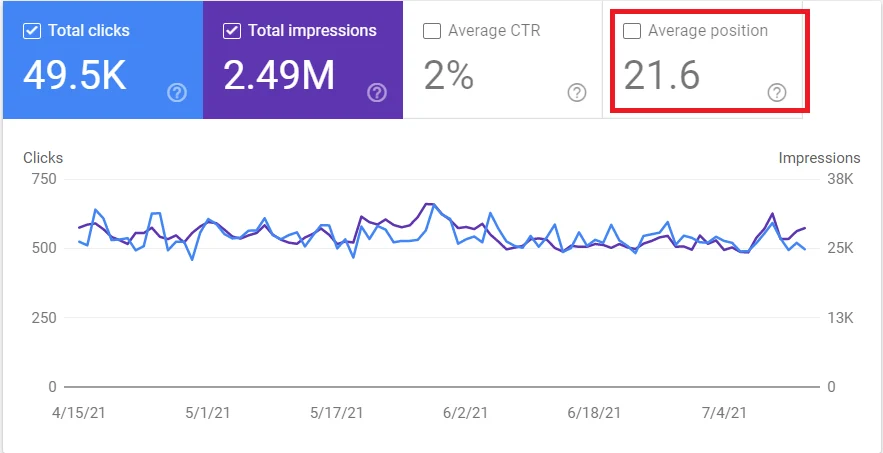
Daily rank tracking tools close this gap by offering near-real-time insight into how keyword positions evolve. For example, a sudden drop in a high-value keyword may indicate a Google penalty, a technical issue, or a new competitor surge.
With daily data, it’s possible to correlate such events with changes in backlinks, content, or site performance metrics.
Additionally, marketers running PPC or seasonal campaigns benefit from aligning organic visibility with paid strategies. When a product launch or promotion goes live, daily tracking ensures that content impact is measurable and adjustments can be made proactively.
Another benefit lies in localization. For businesses targeting multiple cities or regions, keyword rankings can vary drastically by geolocation. Daily tracking helps identify regional SEO performance inconsistencies quickly.
Moreover, algorithm volatility (including updates like Google’s Helpful Content or Core updates) often produces ranking turbulence. Daily data helps distinguish between temporary fluctuations and structural issues.
Finally, daily insights streamline reporting cycles for agencies and teams and allow for faster client communication. It’s easier to justify changes or pivots when rank behavior is well-documented and consistent across each 24-hour cycle.
In essence, daily rank tracking transforms SEO from reactive to proactive, making it indispensable for data-driven decision-making in competitive markets.
Key Features to Look for in Rank Trackers
Not all rank tracking tools are created equal. While daily updates are essential, true SEO value lies in the broader feature set that supports detailed analysis, integration, and reporting.
Before investing in a platform, it’s critical to understand which capabilities align with specific business needs.
Accuracy and Refresh Frequency
Frequent updates without precision can mislead. Look for platforms with reliable SERP crawlers, preferably using Google-approved APIs or location-specific proxies for accurate data.
Device and Geo-Specific Rankings
Ensure the tool can distinguish between desktop and mobile rankings and allow detailed geolocation targeting. This is essential for both local and national SEO strategies.
Integration with Other Platforms
- Google Analytics & Search Console: Seamless syncing helps correlate keyword behavior with site traffic and performance.
- Reporting Tools: Support for automated reports via email, Google Sheets, or dashboard exports increases team productivity.
Historical Data and Trend Comparison
A good tracker will log months or even years of keyword history. It supports seasonal trend analysis, strategy refinement, and executive reporting.
Additional features to prioritize:
- SERP Feature Tracking: Tools that note whether keywords appear in snippets, local packs, or video carousels provide deeper context.
- Alert System: Daily rank drops or gains should trigger notifications, allowing swift action.
- Tagging and Grouping: Segment keywords by topic, funnel stage, or location for easier monitoring.
How to properly segment keywords in Google Ads
Selecting a tool with these features will ensure daily rank visibility and strategic clarity. The right platform becomes an active part of the SEO workflow rather than just a passive reporting utility.
Top Daily Rank Tracking Tools (In-Depth Review)
Selecting the right daily rank tracking software is about choosing a platform that aligns with your workflow, campaign scale, and reporting demands.
Below are in-depth reviews of leading rank tracking platforms, each selected based on daily update capabilities, reporting flexibility, and feature comprehensiveness.
SE Ranking
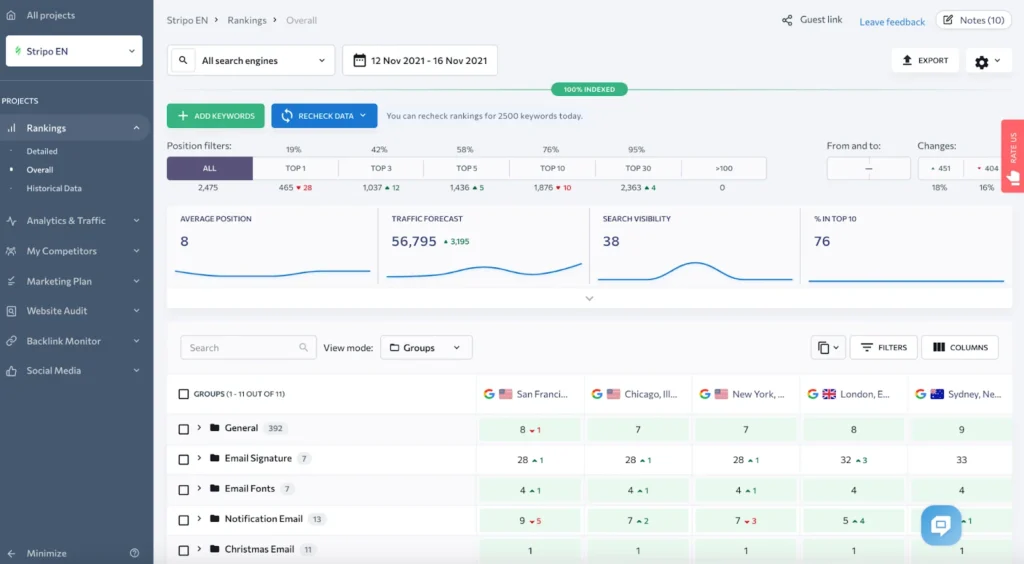
SE Ranking is a versatile SEO platform that focuses on daily keyword tracking. It is ideal for businesses that need precise visibility into SERP performance.
The platform balances feature depth with user-friendly interfaces, providing a full suite for tracking, auditing, and competitor benchmarking.
Core Features
- Daily Keyword Updates: Track rankings for all major search engines, including Google, Bing, and Yahoo, with geolocation precision.
- Competitor Monitoring: Compare rankings against up to 20 competitors per project.
- Keyword Grouping and Tagging: Organize terms by campaign, funnel stage, or topic.
- Integrated Site Audit: Identify technical issues impacting rankings alongside daily position data.
- Marketing Plan Module: Track SEO progress with goal-based task management.
Pros and Cons
| Pros | Cons |
| Clean dashboard and intuitive UI | Limited SERP feature tracking |
| Strong value for price | The interface may lag with large data |
| Broad toolset beyond rank tracking | Report customization is somewhat basic |
Pricing
Plans start at $44.00/month for 250 keywords with daily updates. Custom plans are available for larger agencies or enterprises.
Ideal Use Cases
Best suited for small to mid-sized businesses and agencies that need reliable keyword tracking bundled with audit and planning tools in one dashboard.
AccuRanker
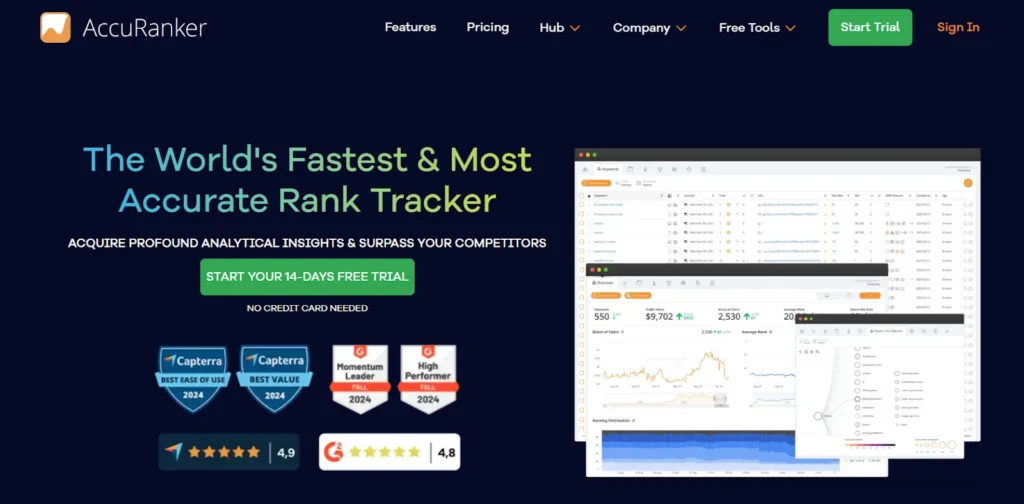
AccuRanker positions itself as the fastest and most accurate keyword tracking tool on the market, focusing on daily (and even on-demand) updates. Built for scale, it’s particularly well-aligned with enterprise SEO teams and agencies managing high-volume campaigns.
Core Features
- Daily and On-Demand Updates: Pull real-time keyword positions across Google and Bing with minimal delay.
- Tag-Based Organization: Segment keywords by device, location, landing page, or custom labels.
- Shareable Live Reports: Export or grant access to dashboards for clients and stakeholders.
- Third-Party Integrations: Connect with Google Analytics, Data Studio, and Search Console.
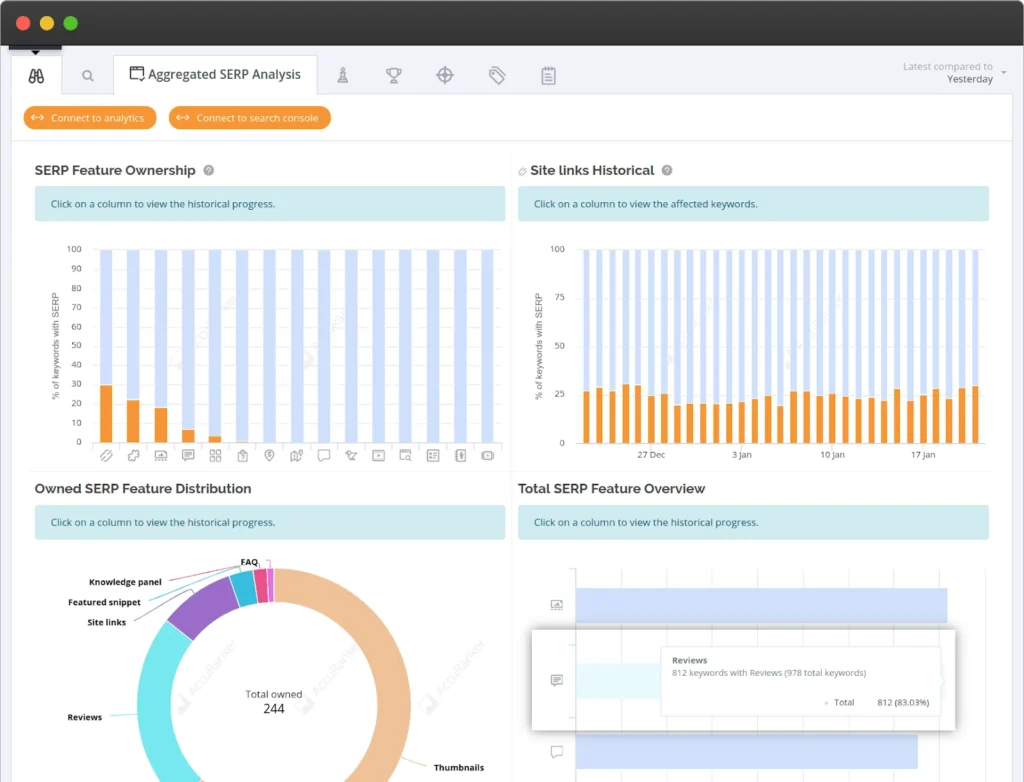
- SERP History Archive: View historical changes in SERP features and keyword volatility.
Pros and Cons
| Pros | Cons |
| Fastest refresh rates in the market | Higher entry-level pricing |
| Transparent data structure | The interface may feel overly clinical |
| Excellent segmentation and filters | No built-in site auditing |
Pricing
Starts at $116/month for 1,000 keywords. Pricing scales based on keyword volume and refresh frequency.
Ideal Use Cases
Highly recommended for digital marketing agencies, in-house SEO teams, and data-heavy campaigns where speed and precision are non-negotiable.
ProRankTracker
ProRankTracker is a rank tracking specialist that emphasizes daily reporting across multiple search engines and platforms. Unlike broader SEO suites, its niche focus allows for deeper customization of reporting and keyword organization.
Core Features
- Daily Ranking Updates: Monitor search performance on Google, Bing, Yahoo, and YouTube.
- Detailed Mobile vs. Desktop Insights: Separate rankings for devices, locations, and languages.
- Multilingual Interface: Useful for global teams managing localized campaigns.
- White-Label Reporting: Full customization of client-facing documents.
- URL- and Term-Based Tracking: Measure keyword performance for both root domains and specific URLs.
Pro Rank Tracker Review – A Great SEO Service for Monitoring Your Websites Online
Pros and Cons
| Pros | Cons |
| Strong YouTube rank tracking | Limited in broader SEO capabilities |
| Extensive white-labeling options | UI is less modern compared to competitors |
| Scales well with keyword count | No integrated site audit |
Pricing
Entry-level plans begin at $13.50/month for 100 terms with daily updates. Pricing is modular and scales with volume.
Ideal Use Cases
Ideal for agencies focused purely on rank reporting, particularly those offering SEO services for multilingual or multi-location clients.
SERPWatcher by Mangools
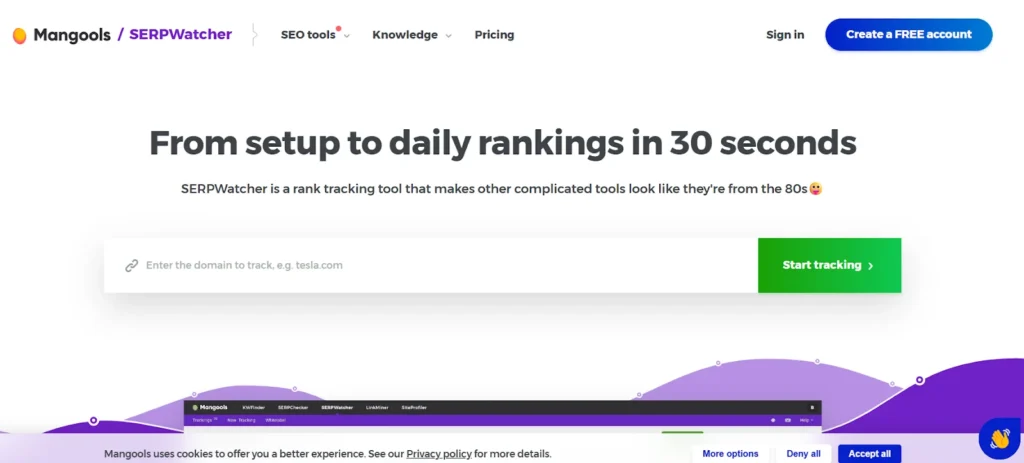
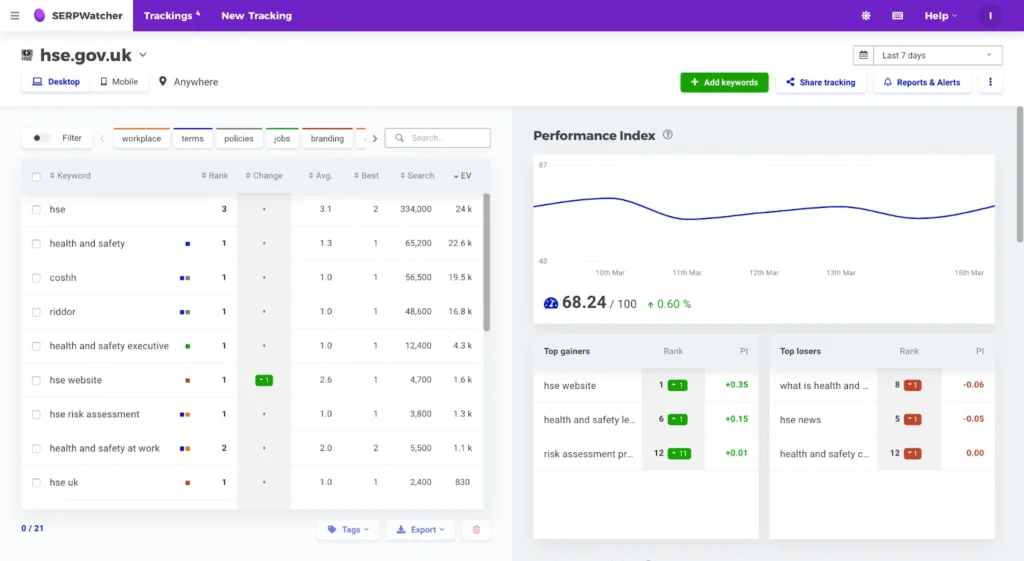
SERPWatcher is part of the Mangools SEO suite and is known for its simplicity and visual appeal. While it may not offer enterprise-level depth, its daily tracking, clean interface, and contextual metrics make it an excellent choice for small businesses and solopreneurs.
Core Features
- Daily Position Updates: Tracks rankings across mobile and desktop with location filters.
- Performance Index: A proprietary metric combining keyword position and estimated traffic potential.
- Interactive Reports: Easily shareable with clients via link or scheduled email reports.
- Keyword Tagging and Filtering: Supports basic segmentation to organize data by topic or intent.
- Integration with KWFinder: Easily pull keyword data into tracking from Mangools’ keyword research tool.
Pros and Cons
| Pros | Cons |
| Intuitive and beginner-friendly | Limited historical SERP data |
| Fast setup and onboarding | No advanced competitor tracking |
| Strong visual reporting tools | Lacks deep analytics customization |
Pricing
Starts at $49/month for 200 tracked keywords across the full Mangools suite.
Ideal Use Cases
Perfect for freelancers, small businesses, or content-driven teams that need quick visual feedback on rankings without overwhelming complexity.
Rank Ranger
Rank Ranger is an enterprise-grade SEO platform with deep reporting customization and robust tracking capabilities. It supports daily updates and multi-layered segmentation, making it ideal for complex, client-heavy operations.
Core Features
- Daily Tracking Across Major Search Engines: Includes Google, Bing, YouTube, local packs, and app rankings.
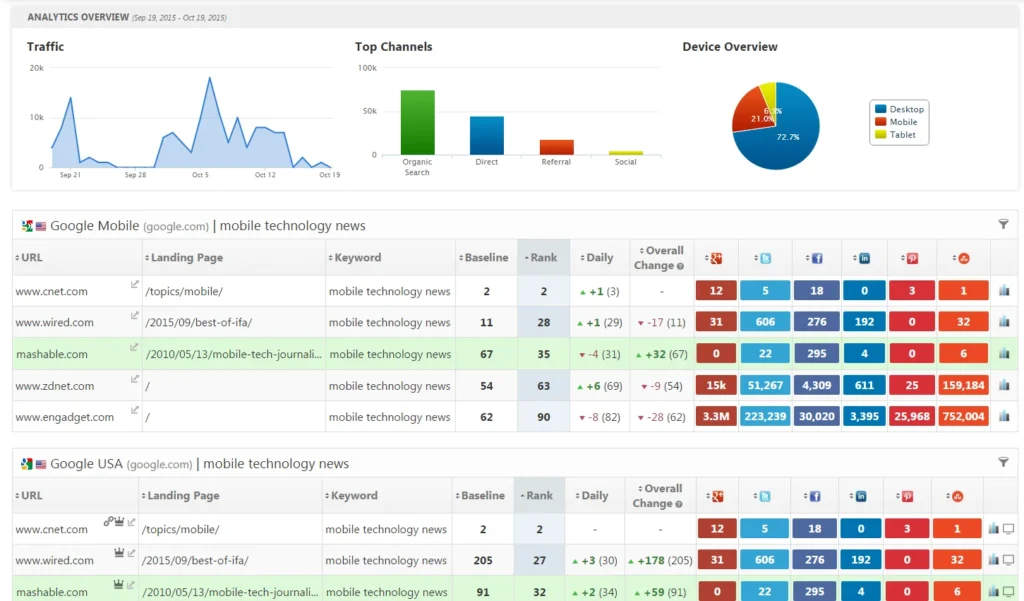
- Custom Dashboards and KPIs: Build visual reports tailored to internal or client-facing metrics.
- SERP Feature Tracking: Monitor Knowledge Panels, featured snippets, ads, and more.
- White-Label Options: Fully branded portals, email reports, and PDFs.
- API Access: Pull rank data into proprietary or external dashboards.
Pros and Cons
| Pros | Cons |
| Highly customizable reports | The interface may be overwhelming at first |
| Support for niche SERPs (YouTube, App) | Pricing not transparent |
| White-labeling at scale | Learning curve for setup |
Pricing
Custom pricing only; you must contact sales based on keyword volume and feature needs.
Ideal Use Cases
Best suited for large agencies, enterprises, or white-label SEO providers with specific branding and data reporting needs.
Ahrefs Rank Tracker
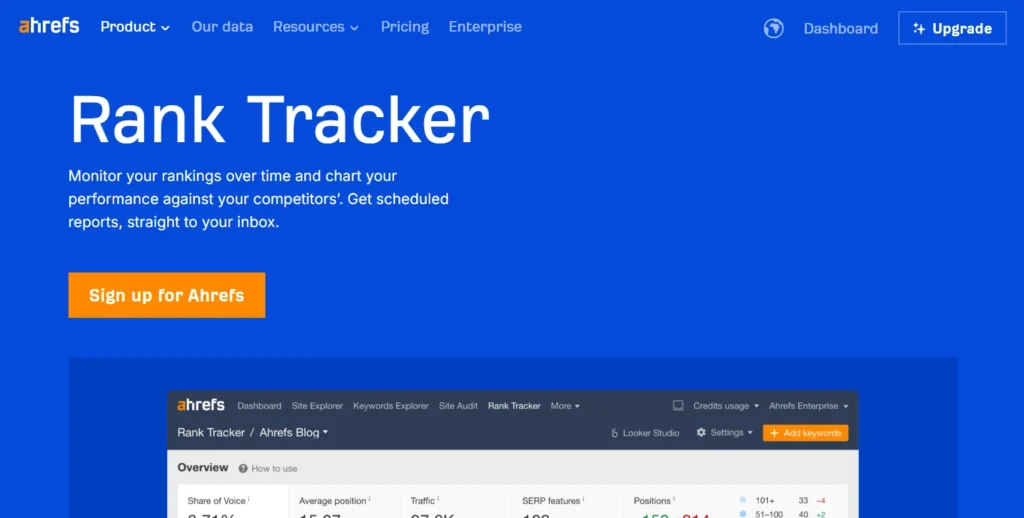
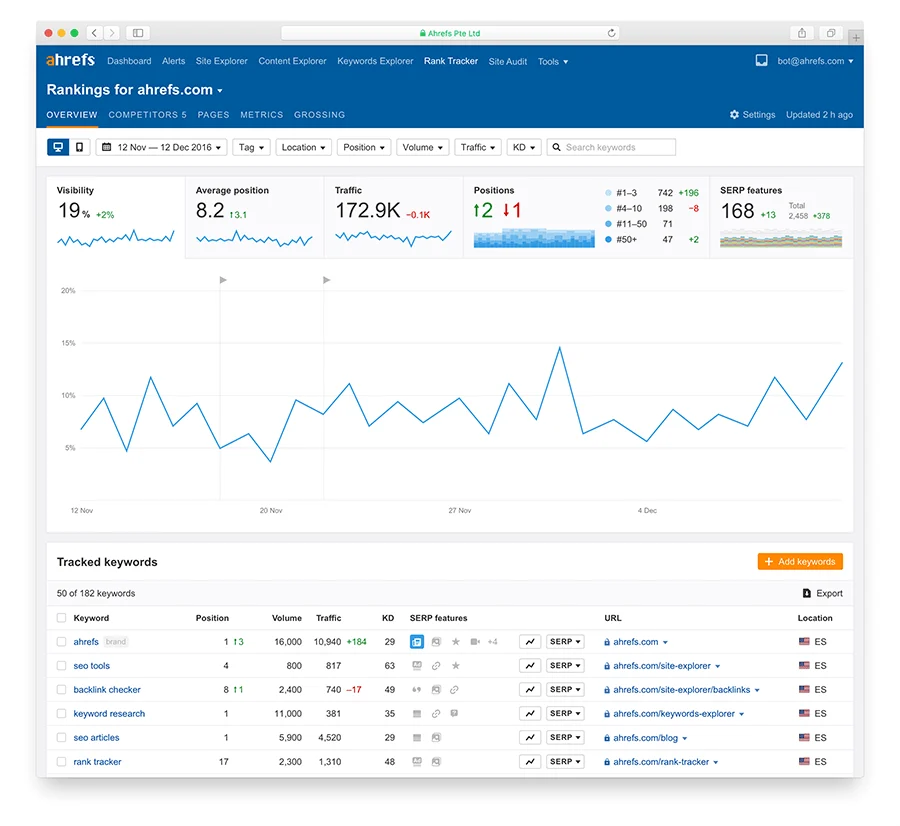
Ahrefs Rank Tracker is integrated into Ahrefs’ powerful all-in-one SEO suite. While it updates rankings daily, its real strength lies in combining keyword data with backlinks, content, and SERP-level insights for contextual decision-making.
Core Features
- Daily and Weekly Rank Tracking: Monitor keyword positions across over 170 countries.
- Visibility and Traffic Metrics: Estimate how rankings affect potential organic traffic.
- Competitor Comparisons: Track up to 10 competitors per project with side-by-side graphs.
- SERP Feature Tracking: Identify when keywords appear in featured snippets, sitelinks, etc.
- Historical Trend Graphs: Visualize performance trajectories over time.
Pros and Cons
| Pros | Cons |
| Integrated with deep backlink data | No real-time/on-demand refresh |
| Excellent competitor and SERP visuals | Limited report customization |
| High accuracy with traffic insights | Higher cost for lower keyword limits |
Pricing
Starts at $99/month (500 keywords included in Lite plan). Higher-tier plans unlock larger keyword volumes and features.
Ideal Use Cases
Ideal for SEO teams already using Ahrefs who want to centralize rank tracking alongside backlinks, site audits, and content analysis.
Advanced Web Ranking (AWR)
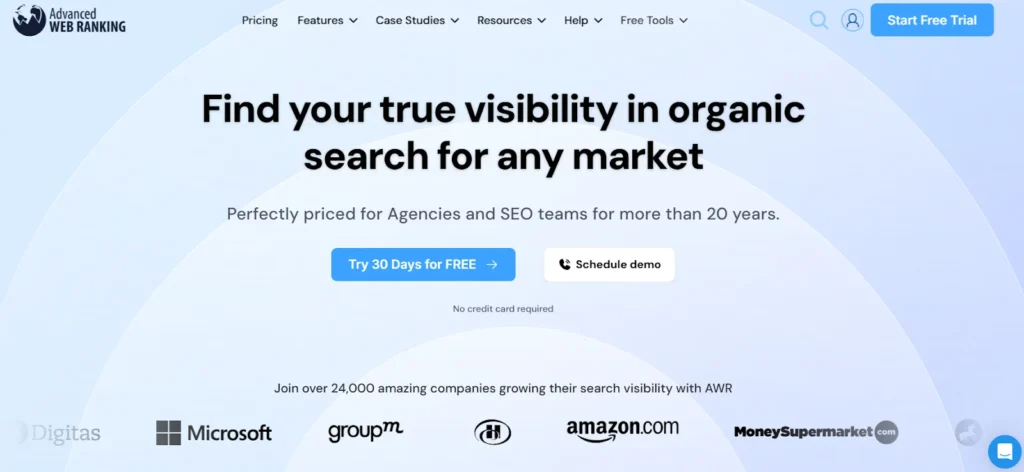
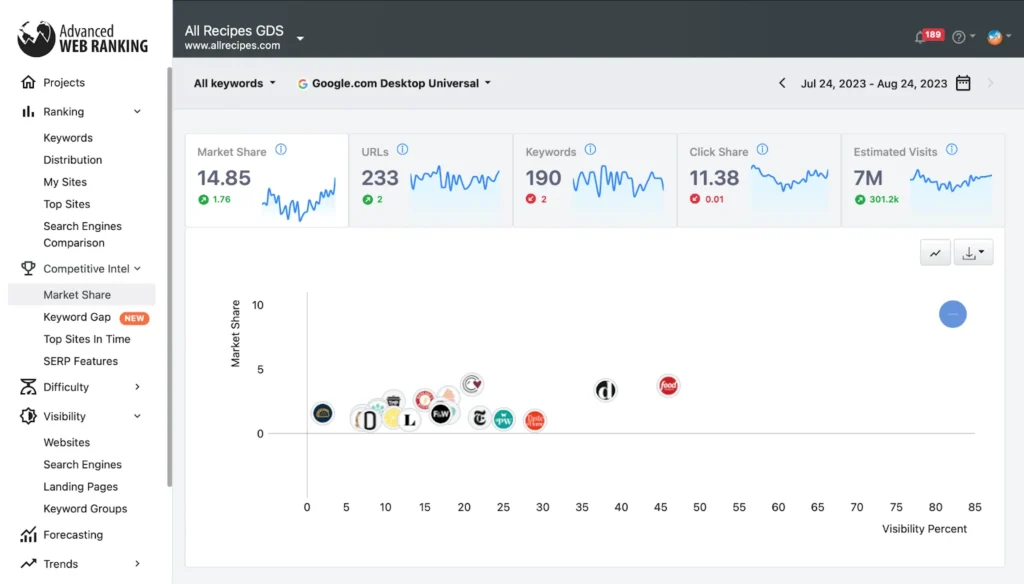
Advanced Web Ranking is a veteran in the SEO space, offering one of the most comprehensive rank tracking solutions available. It is built for scalability, flexibility, and granular data control, making it suitable for complex workflows.
Core Features
- Daily, Weekly, or Custom Tracking Frequency: Control update frequency to manage server resources.
- Local and Mobile Rank Tracking: Supports hyper-local search with precision targeting.
- Unlimited Users and Projects: Ideal for multi-client agencies.
- Custom Dashboards and Reporting: Deep report configuration, including scheduled PDF and white-label formats.
- SERP Feature Monitoring: Tracks everything from featured snippets to “People Also Ask” panels.
Pros and Cons
| Pros | Cons |
| Deep customization across all tools | The interface can be complex to master |
| Excellent scalability for agencies | Requires time for full configuration |
| Detailed SERP analysis tools | No built-in keyword research tools |
Pricing
Starts at $49/month for 2,000 keyword units. Scales with keyword volume and update frequency.
Ideal Use Cases
Built for SEO teams managing multiple domains and clients with custom reporting requirements.
Wincher
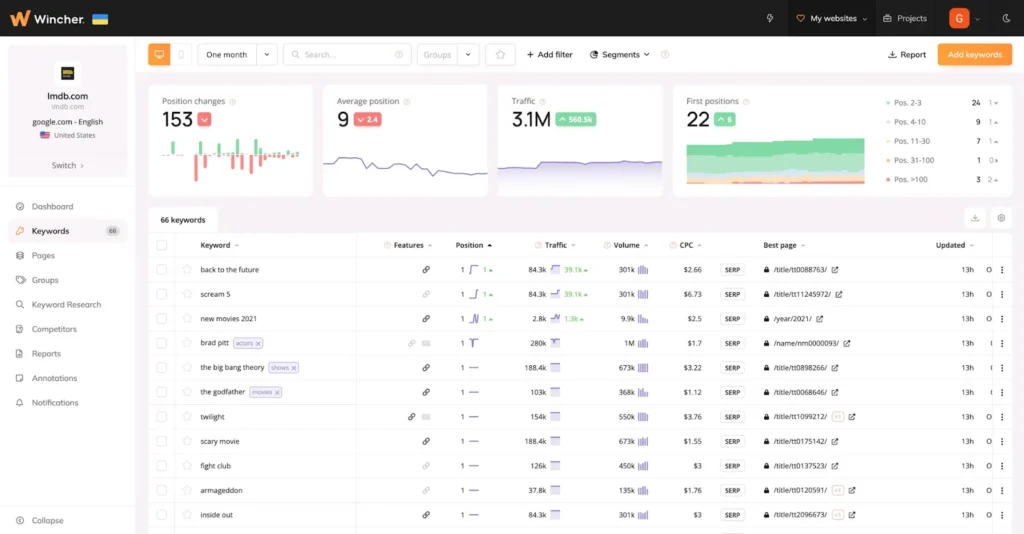
Wincher focuses on simplicity, speed, and affordability. It’s a lightweight yet effective tool for daily tracking, suited to users who need quick access to keyword position updates without the overhead of large SEO platforms.
Core Features
- Daily Tracking Updates: Monitor keyword performance across desktop and mobile.
- Competitor Tracking: Compare rankings with up to 10 competitors.
- Keyword Grouping: Organize keywords by topic or funnel stage.
- On-page SEO Suggestions: Includes basic site optimization tips tied to rankings.
- Scheduled Reports: Send automated PDF summaries to team members or clients.
Pros and Cons
| Pros | Cons |
| Clean, fast, and simple UI | Lacks advanced metrics like CTR |
| Affordable for small businesses | Limited integrations and API usage |
| Easy to scale with keyword volume | No multi-language SERP tracking |
Pricing
Starts at $29/month for 500 keywords. Additional keyword packs are available.
Ideal Use Cases
Great for small to mid-sized businesses or content teams who want reliable daily tracking at a low cost.
Nightwatch.io
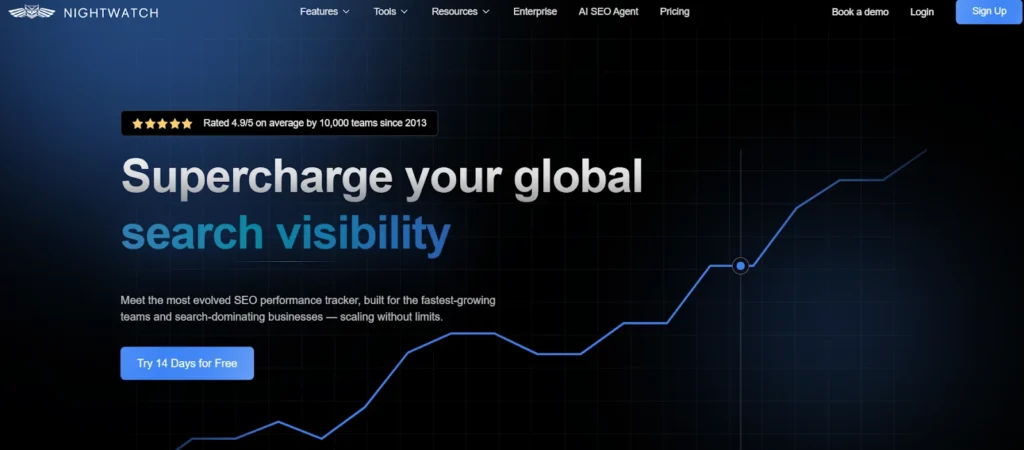
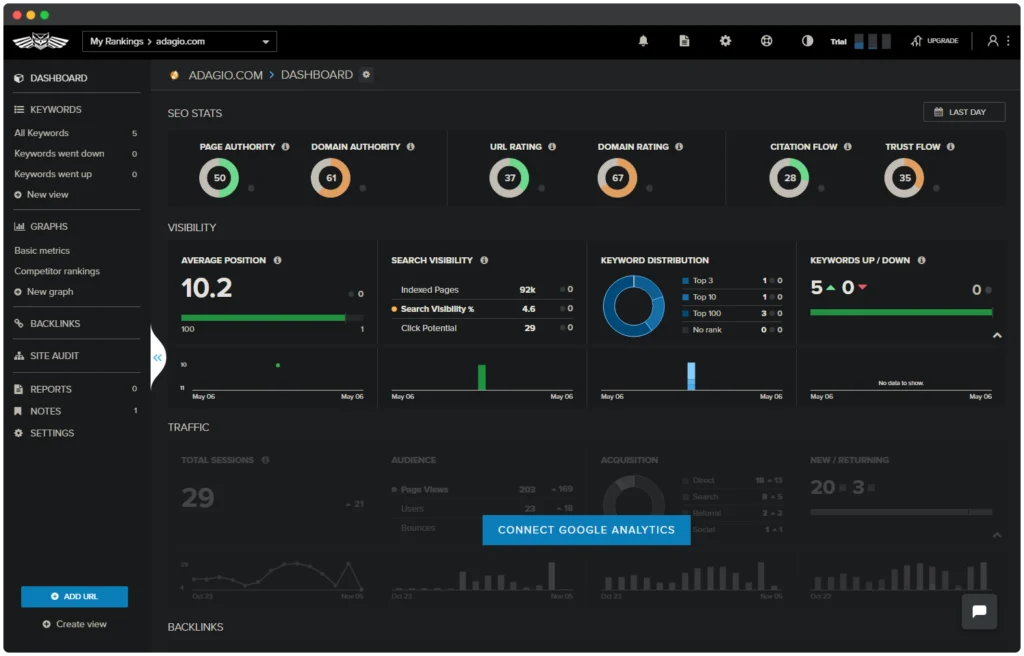
Nightwatch.io is a modern rank tracker built for data precision and SEO automation. It’s especially strong for localized SEO and API-based integrations, and its flexible architecture is ideal for data-centric teams.
Core Features
- Daily Rank Tracking with Geographic Precision: Useful for local SEO and multilingual campaigns.
- Search Visibility Graphs: Track position volatility and gain/loss across date ranges.
- Integrations with Google Data Studio, Analytics, and Search Console: Enrich reports with multi-source insights.
- Advanced Filtering and Segmentation: View rankings by tag, page group, or intent.
- Automated Alerts and Reporting: Get notified of position changes in real time.
Pros and Cons
| Pros | Cons |
| Scalable and API-friendly | Learning curve for advanced filters |
| Powerful visualization tools | No backlink data baked in |
| Highly customizable reporting | Slightly higher pricing than peers |
Pricing
Starts at $39/month for 250 tracked keywords. Tiered plans based on keyword and website count.
Ideal Use Cases
Ideal for local SEO agencies, technical SEO teams, or brands seeking detailed segmentation and automation features.
SEO PowerSuite Rank Tracker
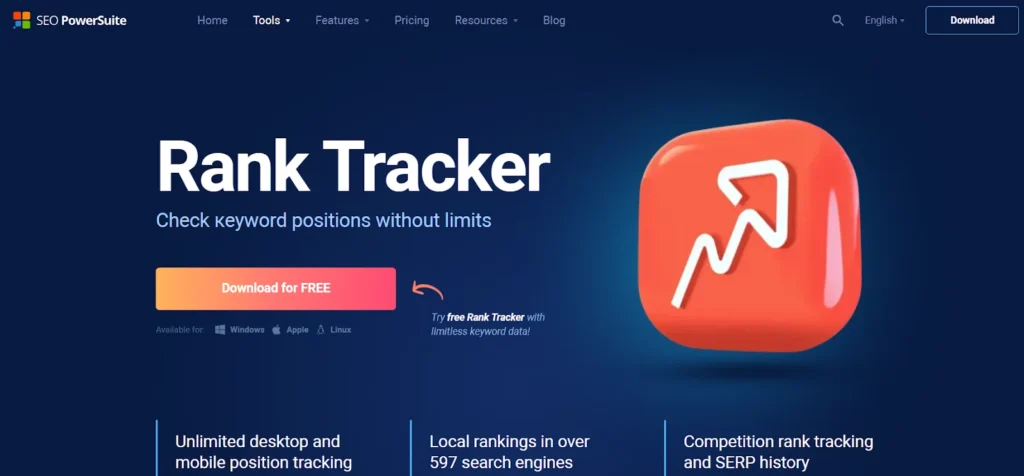
Rank Tracker by SEO PowerSuite is a desktop-based application, offering unmatched depth and customizability for power users who want complete control without relying on the cloud.
Core Features
- Daily and On-Demand Tracking: Unlimited checks with user-defined frequency.
- Unlimited Projects and Keywords: No restrictions, unlike SaaS tools.
- Competitor Analysis and SERP Features: Track multiple domains and featured snippet coverage.
- Integration with Google Services: Supports Search Console and Analytics for enhanced insights.
- Advanced Filters, Tags, and Workspaces: Full segmentation of campaigns with offline storage.
SEO Powersuite Rank Tracker Overview + Review
Pros and Cons
| Pros | Cons |
| Unlimited keywords with a flat license | Desktop-only with no native cloud sync |
| Full control over data privacy | Requires local resources (RAM, CPU) |
| Cost-effective for large portfolios | Slower learning curve for casual users |
Pricing
One-time license starting at $149/year (Professional) and $349/year (Enterprise).
Ideal Use Cases
Best for SEO consultants, freelancers, or analysts who prefer offline tools and need unlimited tracking at fixed annual costs.
Comparison Table of Features & Pricing
To aid in decision-making, the table below compares essential features across the ten tools reviewed. This overview highlights distinctions in pricing, update frequency, integrations, and overall usability.
| Tool | Daily Updates | Integrations | UI Simplicity | Pricing (Starting) | Ideal For |
| SE Ranking | Yes | GA, GSC, GDS | Moderate | $44/month | Agencies, SMBs |
| AccuRanker | Yes | GDS, GA, GSC | High | $116/month | Enterprises, data-driven |
| ProRankTracker | Yes | GDS, API | High | $13.50/month | SMBs, consultants |
| SERPWatcher | Yes | GA, GSC | Very High | $29/month (bundle) | Bloggers, local businesses |
| Rank Ranger | Yes | GSC, Analytics, API | Moderate | Custom (Quote) | Agencies, large brands |
| Ahrefs Rank Tracker | Yes | GSC, GA | High | $99/month (bundle) | Enterprise, advanced SEOs |
| Advanced Web Ranking | Yes | GDS, GA, GSC, API | Moderate | $49/month | SEO teams, agencies |
| Wincher | Yes | Basic | Very High | $29/month | Freelancers, small teams |
| Nightwatch.io | Yes | GDS, GA, GSC, API | Moderate | $39/month | Local SEO, SaaS |
| SEO PowerSuite | On-demand | GSC, GA | Low | $149/year (desktop) | Technical SEOs, freelancers |
How to Choose the Right Tool for Your Business
The ideal rank tracking tool aligns with business size, resources, and campaign goals. The following breakdown clarifies tool suitability by business type.
Small Agencies
For small agencies managing client deliverables, scalability and white-label reporting are vital. Tools like SE Ranking or Advanced Web Ranking offer multi-project dashboards, API access, and granular SERP feature tracking without overwhelming pricing structures.
Small Businesses
Simplicity, cost-efficiency, and actionable insights define a good fit here. Wincher, SERPWatcher, and ProRankTracker provide affordable daily updates, basic competitor monitoring, and clean UIs that reduce setup friction.
Enterprise SEO Teams
Enterprises demand advanced reporting, automation, and integration support. AccuRanker, Ahrefs, or Rank Ranger are built to handle high-volume tracking, support for team roles, and seamless exports to business intelligence platforms.
Local SEO and Niche Campaigns
Precise geo-targeting and mobile SERP data are core priorities. Nightwatch.io and Advanced Web Ranking both offer localized insights, customizable location filters, and segmentation suited for physical businesses or localized services.
Common Mistakes in Rank Tracking and How to Avoid Them
Many users misinterpret rank data or overlook critical tracking nuances. The following are frequent errors and solutions.
- Tracking Keywords without Search Intent Mapping: Avoid monitoring keywords that don’t align with actual conversion goals. Intent-focused tracking provides higher business relevance.
- Not Setting Consistent Tracking Parameters: Failing to fix location, device, and language creates inconsistent reports. Use uniform settings across all checks.
- Ignoring SERP Volatility and Competitors: Rank drops can stem from SERP layout shifts or competitor actions. Monitor SERP features and visibility trends, not just raw positions.
- Overlooking Long-Tail Keyword Performance: Focusing only on core keywords misses emerging opportunities. Balance tracking between head terms and long-tail queries.
- Failing to Audit Regularly: Rankings change daily. Schedule periodic audits to clean outdated keywords and refine tracking focus.
Conclusion
Daily rank tracking is a strategic necessity, not a vanity metric. By choosing the right tool and implementing consistent monitoring practices, business owners gain clear visibility into SEO performance.
When leveraged correctly, these insights drive smarter optimizations and long-term growth. Always align tool features with business goals to maximize value and avoid data overload.