

The New Reality of Ranking in a Post-AI World
Is your content a commodity?
Honestly, that’s the question Google is asking about every page on the web right now. And the simple, brutal truth is this: Google thinks so, unless you can actively prove otherwise.
This is where the concept of E-E-A-T comes in. It’s not just a fancy acronym for SEO nerds. It is Google’s quality control system designed to separate the real experts who have actually done the work from the generic content generators who are just paraphrasing.
If you’re a small business or a niche site operator, this framework is absolutely non-negotiable. It’s the core of what Google calls the Helpful Content System (HCS). If your content doesn’t look like it was created by a real person with real experience, it doesn’t matter how many backlinks you have, your rankings will slowly, or quickly, erode. I might be wrong, but I think this fundamental shift is the biggest change in SEO since mobile-first indexing.
Who Needs to Pay Attention to E-E-A-T? (The YMYL Factor)
For a long time, we talked about E-A-T, and it felt like a requirement mostly for those working in YMYL topics.
YMYL, which stands for Your Money or Your Life, refers to content that could potentially impact a person’s health, financial stability, or safety. Think medical advice, legal guidance, or investment recommendations. If you’re writing about how to invest your 401k, E-E-A-T is an absolute necessity, Google can’t risk sending people to a fly-by-night operation.
But here’s the crucial insight for small businesses: even if you are not strictly YMYL, demonstrating E-E-A-T is the key to ranking against major, authoritative sites. Why? Because the bigger sites have built-in authority and links. Your small business needs a competitive edge, and your unique, hands-on knowledge is your superpower. You need to prove you are a more credible, reliable, and experienced source than the biggest player in your space.
Now, let’s dig into the four pillars that make up this quality standard.
What is E-E-A-T? Breaking Down the Four Pillars
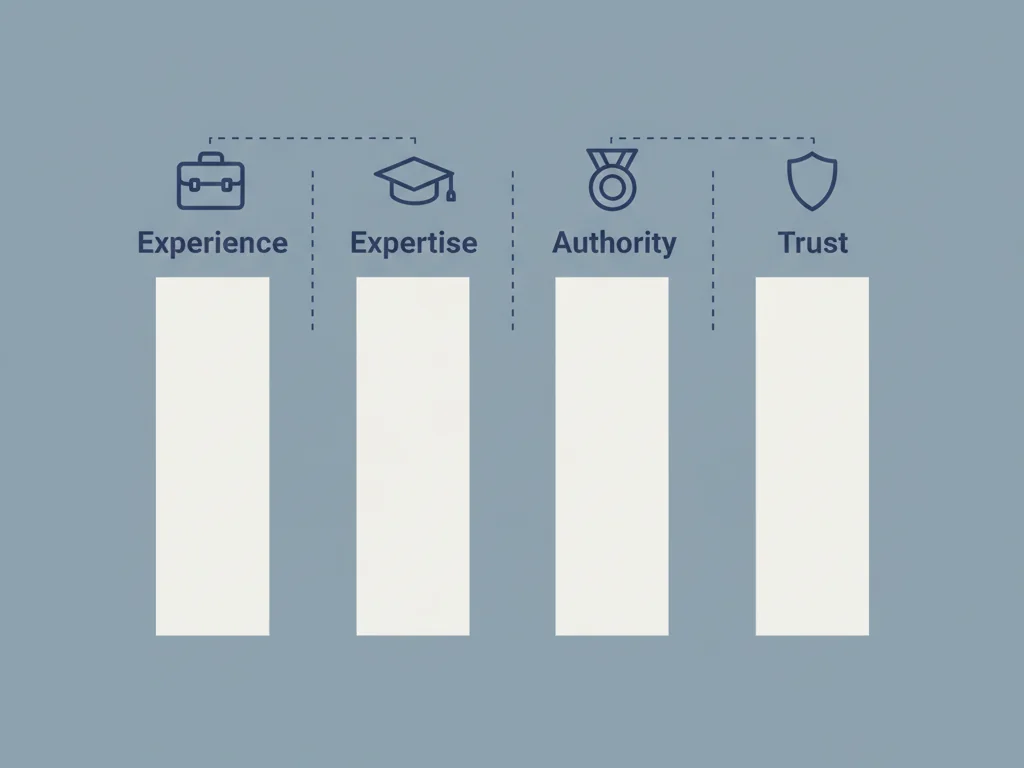
When Google added the second “E” in the December 2022 update to the Search Quality Rater Guidelines (SQRG), they cemented the idea that you can’t just talk the talk, you have to walk the walk.
The Foundational Element: Trustworthiness (T)
Trustworthiness is not just one of the four letters, it is the foundation.
Definition: Trust is about the accuracy, transparency, safety, and reliability of the website and the content creator. A site can be expertly written, but if the site itself feels shady, all is lost. Honestly, this part trips people up all the time. People spend thousands on content but forget the basics of trust. Low trust negates all the other E’s and the A.
Actionable Tip (T): Start with the absolute basics. You need secure hosting (HTTPS), a clearly visible privacy policy, and a transparent contact page. A physical address or service area listing, if you have one, immediately makes you look more legitimate.
The Great Equalizer: Experience (E)
Here is the exciting part for small businesses. Experience is your secret weapon against the big brands.
Definition: This means having first-hand, real-world, or life experience with the topic. It’s about doing the thing you write about. Did you actually build that deck, use that software, or implement that marketing strategy?
Small Business Superpower: A large corporation might have a talented writer summarize 10 existing articles. But you, the small business owner, have the hands-on experience of actually serving clients for years. Your unique insights, the small mistake only a practitioner knows to avoid, can easily beat the large brand’s theoretical knowledge.
Actionable Tip (E): Replace those generic stock photos with original, authentic images of you, your team, your process, or your product in use. If you’re a coach, show photos of you leading a workshop. If you sell coffee beans, show your roastery.
The Personal Edge: Expertise (E)
While experience is about the doing, expertise is about the knowing.
Definition: Expertise is a high level of knowledge, skill, or qualifications in the subject matter. This is the difference between someone who used a hammer once (Experience) and someone who is a licensed finish carpenter (Expertise).
Distinction: Experience is using a product, Expertise is understanding the mechanics of why it works and troubleshooting complex issues. This is where I’d probably mess this up if I rushed, by not clearly distinguishing the two. You can be experienced without being a recognized expert, but true authority combines both.
Actionable Tip (E): Create detailed author bios that clearly list any certifications, relevant work history, or academic credentials. Make sure you are citing industry studies and niche reports to back up your technical claims.
The Reputation Builder: Authoritativeness (A)
You can’t just claim to be an expert, others must confirm it.
Definition: This is the recognition that the creator and the website are the respected, go-to source for a specific topic within a community.
Authoritativeness vs. Authority: This is critical. Authority is what you tell Google, Authoritativeness is built on what others say about you. It’s an earned reputation.
Actionable Tip (A): Focus on building genuine reputation. This includes getting high-quality backlinks, mentions from reputable news sites, and, crucially, positive customer reviews on third-party sites like Google My Business or Yelp.
The Small Business E-E-A-T Action Plan: 12 Practical Steps
E-E-A-T isn’t a switch you flip, it’s a series of small, measurable changes. Here is your action plan, broken down into affordable and actionable steps.
Step 1: Maximize Your Author & Company Signals (The “Who” and “Why”)
This is about removing all doubt about who you are and why you are qualified.
On-Page Optimizations for the Author
Forget the tiny “About the Author” blurb at the bottom. Create detailed Author Bio pages for everyone who contributes content. Include a clear, professional headshot, a list of their credentials (don’t be shy about that!), and links to their professional social media profiles. Then, use Schema Markup (specifically, Person or Organization Schema) to explicitly tell Google’s machines who created the content.
Transparent About and Contact Pages
Your About Us page is an E-E-A-T magnet. Include a physical address (if relevant) or a clear service area. List a phone number and email address that actually work. Furthermore, document your Editorial Policy and any Fact-Checking Process you follow. This level of transparency builds immediate trust with both readers and search engines.
Step 2: Supercharge Content with Authentic Experience (The First E)
The difference between a B-grade article and an A-grade one is often the tangible proof of experience.
Replace Stock Photos with Unique, First-Hand Visuals
We already touched on this, but let’s get specific. If you’re writing a tutorial, include before-and-after photos that only you could have taken. If you review a product, show a photo of it in your workshop. Seeing a blurry photo of a tool with a coffee stain next to it is often more trustworthy than a perfect, generic stock image. It adds lived detail.
Publish Detailed, Proprietary Case Studies
Move beyond generic testimonials that say “They were great!” Share actual, detailed case studies. Share the problem your client faced, your unique solution (the thing only you would think of), and the measurable result (e.g., “increased conversions by 45% in 6 weeks”). Pro Tip: Use client names or logos (with permission) for maximum impact. That’s pure, authentic social proof.
Step 3: Demonstrate Expertise and Depth (The Second E)
Your expertise should be evident in the quality and depth of your coverage.
Create the “Ultimate” Guides on Niche Topics
Instead of writing five shallow articles on a topic, write one massive, authoritative guide that covers all the subtopics so thoroughly that readers have no reason to leave your site. This is how you build Topical Authority through Topical Clusters. As you write, link to research: cite industry studies and academic papers to back up claims, showing you did your homework.
The Power of User-Generated Content (UGC)
User-Generated Content (UGC) is free, authentic, and powerful proof of expertise. Embed positive reviews and detailed customer Q&A directly into your relevant product or service pages. When a customer confirms your expertise in a public forum, it’s ten times more potent than when you claim it yourself.
Step 4: Build Authoritativeness (The A)
This is about reputation management, and it doesn’t require a massive PR budget.
Focus on Niche, High-Quality Backlinks and Mentions
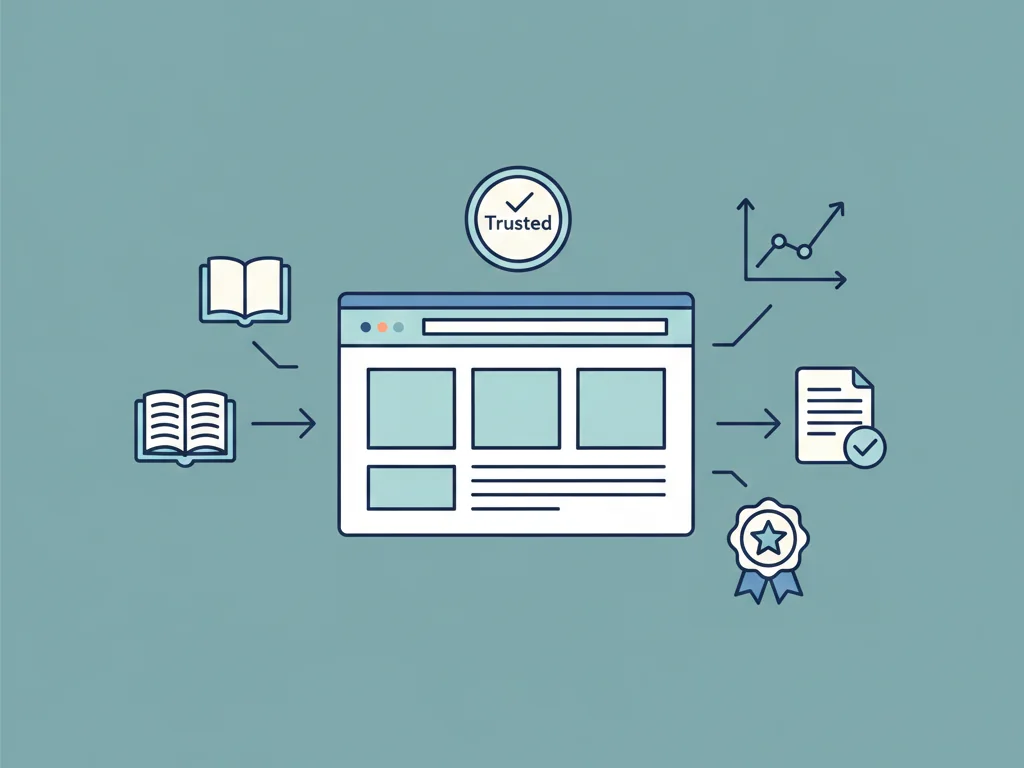
Stop chasing low-quality bulk links. Focus on niche, high-quality links and unlinked Brand Mentions. A mention from a local newspaper or an industry-specific blog is incredibly valuable. Try services like Help A Reporter Out (HARO), where you can respond to journalist queries as an expert. This is a great way to get press mentions without a huge PR budget. Also, seeking local-specific links and citations from local chambers of commerce or professional directories is crucial for local businesses.
Leverage Professional Credentials and Awards
Make your credentials shine. Display Certifications, Licenses, and Industry Awards prominently on your site. If you have participated in any expert interviews, podcasts, or webinars, list those, too. Every single mention adds weight to your authority.
Step 5: Protect the Foundation: Trust (The T)
Trust is not a one-time setup, it is a continuous process of maintenance.
Content Accuracy and Freshness Audit
Establish a “Last Updated” date on all your evergreen articles. If you wrote a guide in 2021, and the facts have changed, you need to update it, or your trust factor will drop. Perform regular audits to ensure accuracy. Fact-check your biggest competitors, if you find they are wrong, you can look more trustworthy by providing the correct information and citing your source.
Website Security and Page Experience
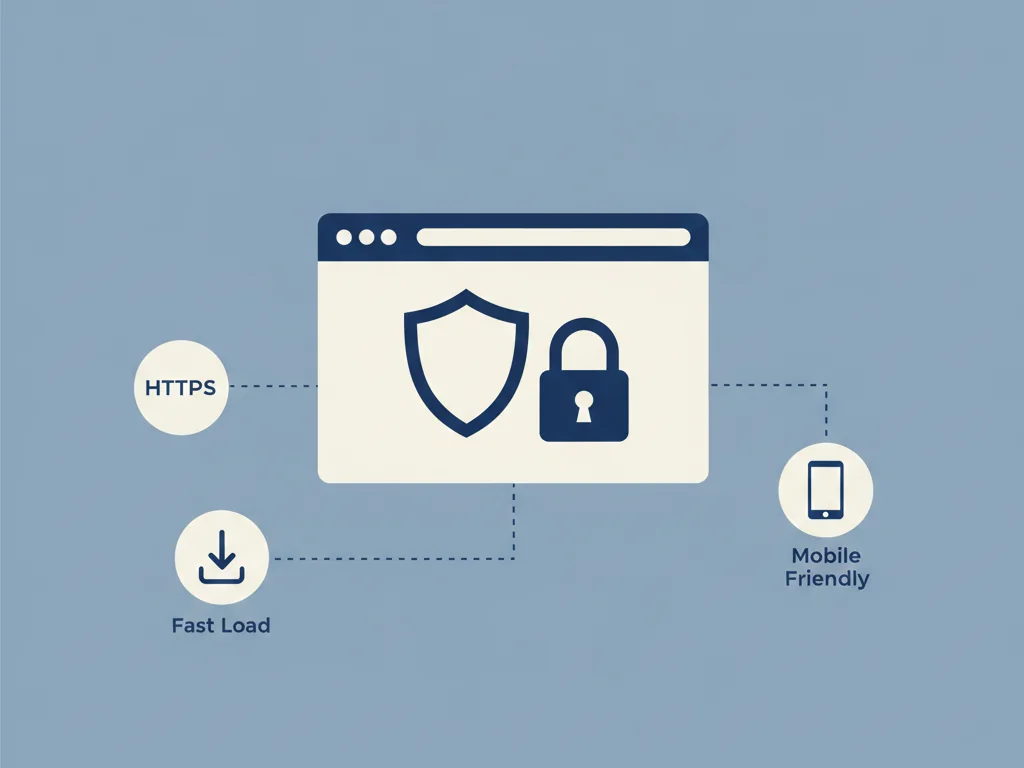
Your site needs to load fast and look good on every device. This is part of Page Experience and it absolutely contributes to trust. Slow load times or a clunky mobile experience feel unprofessional, which undermines trust. Ensure excellent mobile-friendliness and fast page speed (Core Web Vitals).
E-E-A-T Myths vs. Realities for Small Businesses
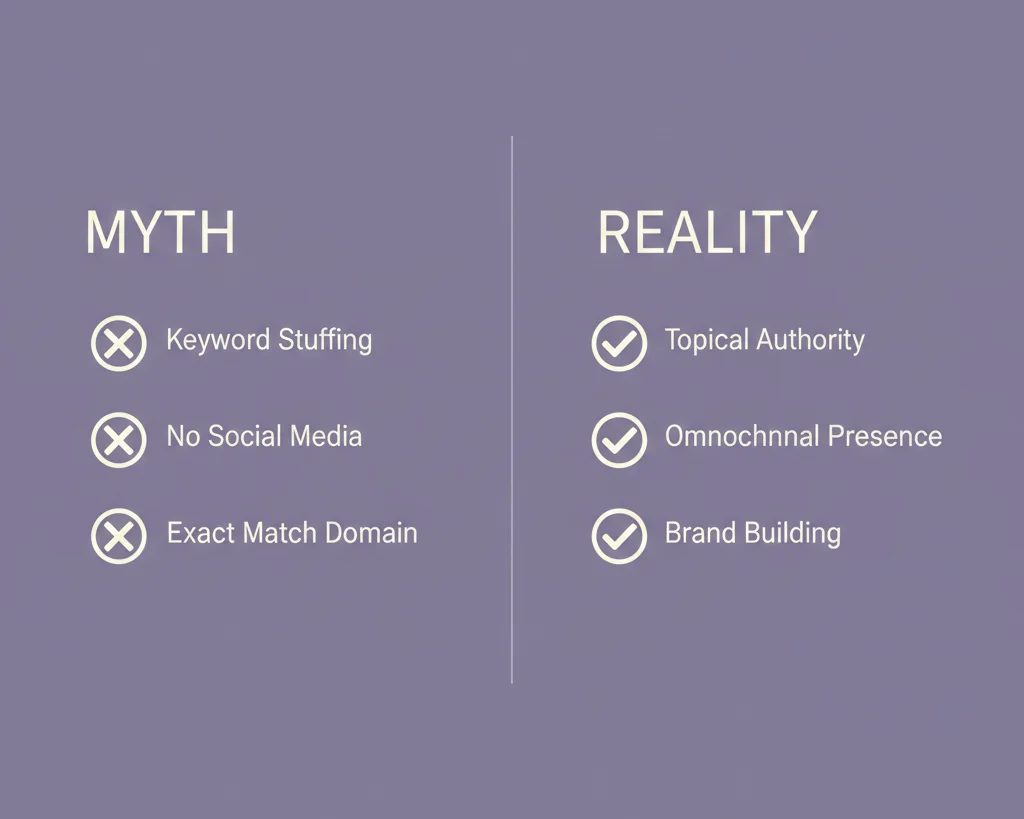
A lot of misinformation swirls around this topic. Let’s clear the air.
Myth 1: E-E-A-T is a Direct Ranking Factor
Reality: E-E-A-T is not a score you can directly optimize, like page speed. It is a set of guidelines for human Quality Raters whose feedback informs the algorithm. It is a mindset for quality, if you follow the mindset, your content will perform better across all of Google’s systems.
Myth 2: Only Big Brands Have High E-E-A-T
Reality: This is why I am so excited for small business owners! Small niche brands with deep, first-hand experience and transparent operation can outrank generic, high-authority sites on specific, long-tail keywords. A Wikipedia article on “car repair” will always rank high, but an article written by a local mechanic who has fixed 1,000 cars on “how to replace the oil pan on a 2012 Ford Focus” can easily beat the big guys because of their specific, demonstrated Experience.
Myth 3: AI Content Automatically Kills E-E-A-T
Reality: AI content, by itself, is only a risk if it lacks the human-provided Experience and Expertise to edit, verify, and augment it. If you use AI to draft an article, but then an actual expert on your team checks it, adds proprietary data, includes their own high-quality photos, and signs off with a detailed bio, then that content can be fantastic. E-E-A-T rewards the human oversight, not the content format. My previous experience suggests that AI is a tool, but it’s the human editing layer that adds the E-E-A-T.
Conclusion: Becoming the Unavoidable Authority in Your Niche
Your Long-Term E-E-A-T Strategy
E-E-A-T is not a sprint, it’s a sustainable business strategy that rewards integrity. It asks you to be the best and most trustworthy source in your niche. When you make a decision to build a business that values real experience over quick content tricks, you are building an asset that is naturally resistant to Google updates.
Final recommendation: Start by focusing on the Experience you can uniquely provide and the Trust signals you can instantly implement. Your unique story and your honest work are your competitive advantages.
Next Steps: Audit Your Site Today
Don’t put this off. Open a new tab right now and audit your site. Review your About Us page and your last five articles with the E-E-A-T framework in mind. Ask yourself:
- Trust: Is my contact info clearly visible?
- Experience: Did I use a stock photo when I could have used a real one?
- Expertise: Is my author bio detailed enough?
- Authoritativeness: What are others saying about me?
What’s the first Trust signal you can add to your site in the next 15 minutes?