

If you’re a partner or marketing director at a law firm, you already know the stakes are ridiculous. We’re not talking about selling a cheap widget here. You’re vying for the attention of people in the middle of a life-altering crisis, and they need a lawyer now.
The legal vertical is one of the most competitive and expensive spaces in all of digital marketing. I might be wrong, but I’m pretty sure the cost per click for a keyword like “personal injury lawyer NYC” could fund a small country’s defense budget for a day. Seriously. It’s insane.
That’s why the old, sloppy SEO tactics of five years ago just don’t work. The goal isn’t to drive meaningless traffic anymore. The goal is to track a potential client’s journey from a frantic Google search to a signed retainer agreement. We’re aiming for high-value client acquisition, and that demands a 2026-ready, ethical, and ruthlessly strategic blueprint.
This is your complete guide to Law Firm SEO.
The Trust Engine: Why E-E-A-T is Your Firm’s Most Important Asset
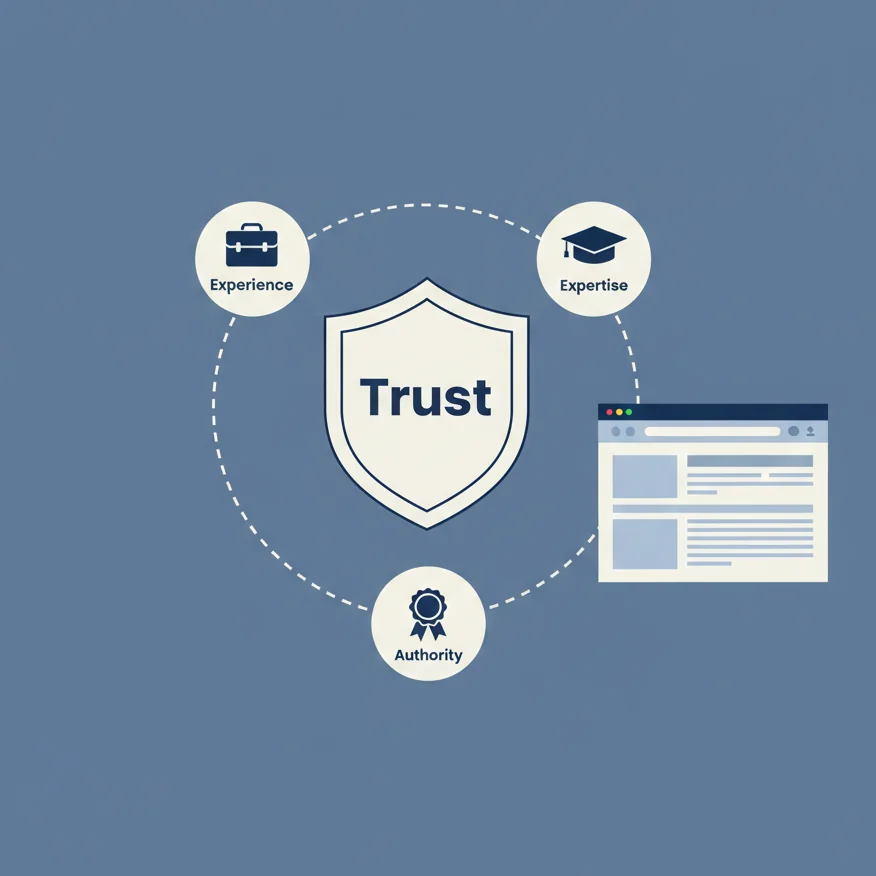
Honestly, this part trips people up all the time. Lawyers are naturally authoritative folks, but they often struggle to translate that authority into the digital signals Google actually cares about.
The core of successful legal SEO rests on E-E-A-T Expertise, Experience, Authority, and Trust. This framework isn’t just a buzzword for law firms, it’s a non-negotiable requirement because legal advice falls under Google’s YMYL (Your Money or Your Life) content category. If your content or advice could impact a person’s financial stability, health, or safety, Google applies extra scrutiny. The barrier to entry for ranking for a YMYL topic is incredibly high.
You’re basically asking Google to bet their reputation that your legal advice won’t ruin someone’s life. If you don’t have an airtight E-E-A-T profile, you simply will not rank for high-intent keywords.
Expertise and Experience: Showcasing Case Victories and Attorney Credentials
Expertise is theoretical knowledge. Experience is what you get after a decade of applying that knowledge in a courtroom. Google now heavily weighs the second ‘E’ for Experience, which means you need to prove you’ve actually handled cases like the one the user is searching for.
A simple list of practice areas isn’t enough. You have to weave your real-world wins into the site.
- Tip: Instead of a generic sentence saying “We handle personal injury,” create a detailed, ethically compliant Case Study page that walks through a complex, high-stakes case. Focus on the legal challenges, the strategy, and the outcome. Even if you can’t name the client, the story proves the experience.
- The Statistic: Businesses that maintain a blog see about 67% more leads than businesses that don’t, according to a HubSpot report. For a law firm, that blogging should be packed with the kind of specific, experienced-based insight only a practicing lawyer could provide.
Authority and Trust: Third-Party Validation (Bar Associations, Peer Reviews, Media)
Your firm is an authority in its niche, but Google only trusts what other reputable sources say about you. This is the Authority and Trust part of the equation.
We’re talking about high-quality backlinks from organizations that matter in the legal world.
- What to Target: Links from State Bar Associations, Law School alumni pages, local and regional news sites quoting one of your attorneys, and high-quality legal directories like Martindale-Hubbell or Avvo. These are the equivalent of a peer-reviewed article in the legal world.
- What to Avoid: Low-quality link schemes. Spammy, fabricated backlinks are the death knell for a legal site. You can’t afford to look shady in the eyes of the search engine or the client.
Ethical SEO: Navigating State Bar and ABA Advertising Guidelines
This is where I’d probably mess this up if I rushed. SEO is one thing. Violating State Bar rules is career suicide. The American Bar Association (ABA) Model Rules, particularly Rule 7, dictate that all communications about a lawyer’s services must be truthful and not misleading. This extends to every word on your website.
Compliance Checklist: Avoiding Misleading Claims and Unethical Practices
You have to be scrupulous about your claims.
- Avoid: Phrases like “Best Lawyer in Town,” “100% Success Rate,” or “Guaranteed Victory.” These are all red flags for the Bar and Google. Rule 7.1 prohibits statements that create an unjustified expectation about results.
- Focus on Facts: Detail your actual credentials, areas of certification (if legitimately certified by an ABA-approved body, per Rule 7.2(c)), and specific trial experience. Honesty is your only strategy here.
How Disclaimers Impact Trust and Authority Signals
Disclaimers aren’t just a legal necessity, they’re a powerful trust signal. They show you take your ethical obligations seriously, which, surprisingly, also appeals to a search engine prioritizing trustworthiness.
You need to clearly state that:
- The information on the site is not legal advice.
- The content does not create an attorney-client relationship.
- Any case result mentioned is not a guarantee of a similar outcome.
Keep these disclaimers clear, visible, and placed near high-stakes content like case results or contact forms. This simple step can keep you compliant while subtly boosting your authority signals.
The Local Focus: Why Law Firms Must Dominate the Map Pack
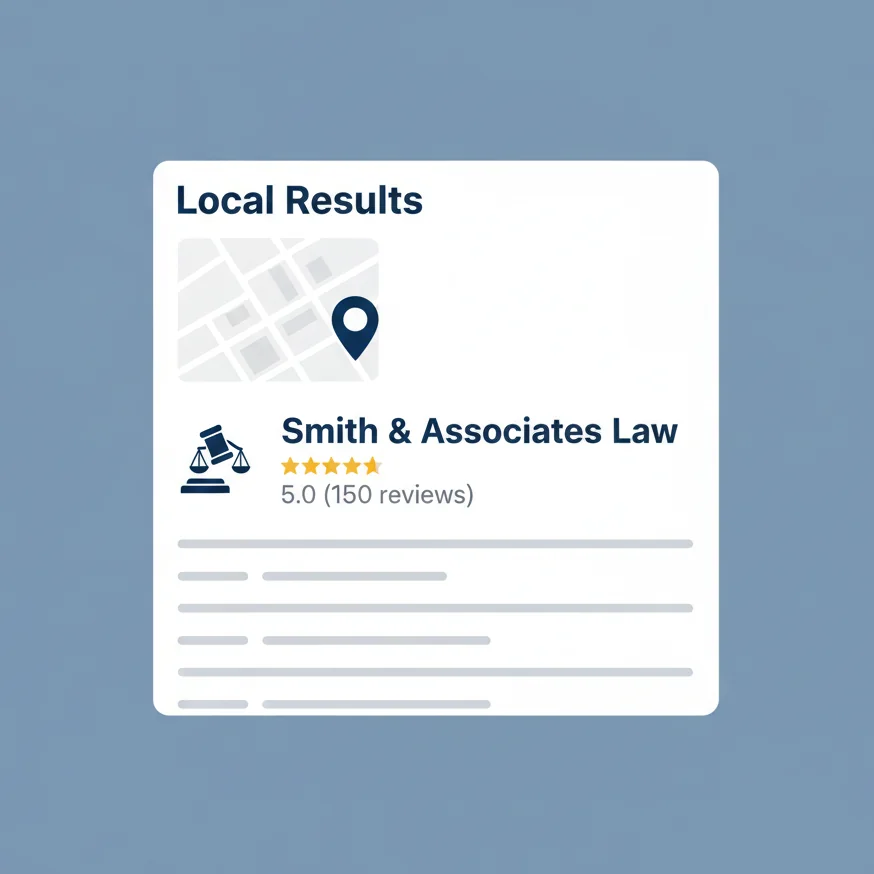
The majority of legal searches are local. A person who needs a DUI lawyer in Atlanta isn’t searching for a firm in Seattle. They need someone nearby, immediately. Nearly 46% of all Google searches are related to a local business or service so optimizing for the Map Pack is non-negotiable.
This means your Google Business Profile (GBP) is arguably the single most important page on your entire domain. If you’re a multi-location firm, you need a strategy for each satellite office, ensuring each one has its own verified, optimized GBP listing, consistent with local bar rules on non-primary offices.
Phase 1: Strategic Planning and Advanced Keyword Mapping
Before you write a single word of content or fix one line of code, you need a map. A lawyer knows you don’t go to trial without one, and SEO is no different.
High-Intent Keyword Research: Targeting the “Hire Now” Moment
Forget the vanity metrics like traffic volume. Law firm SEO isn’t about 100,000 visitors, it’s about getting ten visitors who are ready to sign a retainer right now.
- Focus: Target transactional intent keywords. These are the ones where the searcher’s pain is at its highest and they are ready to convert.
- Example Keywords: “divorce lawyer near me cost,” “wrongful termination attorney free consultation,” or “how to hire a truck accident lawyer in [City].”
Mapping Keywords to Case Value (Focusing on ROI, not Volume)

This is a business decision. A firm handling complex commercial litigation or high-asset divorce should be willing to pay (in time, money, and effort) far more for those keywords than for low-value traffic.
- My previous experience suggests you should assign a Case Value Score to every target keyword. High-value cases (e.g., $100k+ potential fee) get a higher score. You then prioritize content and SEO effort based on this score, not just search volume.
- The Breakeven Point: According to one SEOProfy study, the average cost per SEO lead in the legal space is around $456, and the ROI breakeven point is roughly 14 months. You must focus on high-value leads to justify that investment timeline.
Identifying Geo-Targeted Keywords and Service Area Modifiers
Local SEO demands precision. You need content that is highly relevant to a specific geography.
- Example: Don’t just write about “Car Accident Law.” Write about “What to do after a car accident on the 405 freeway in Los Angeles County” and include references to specific local laws or courts. This ultra-specific content signals hyper-local relevance to Google.
Attorney Name Search Optimization: Protecting Your Brand SERP
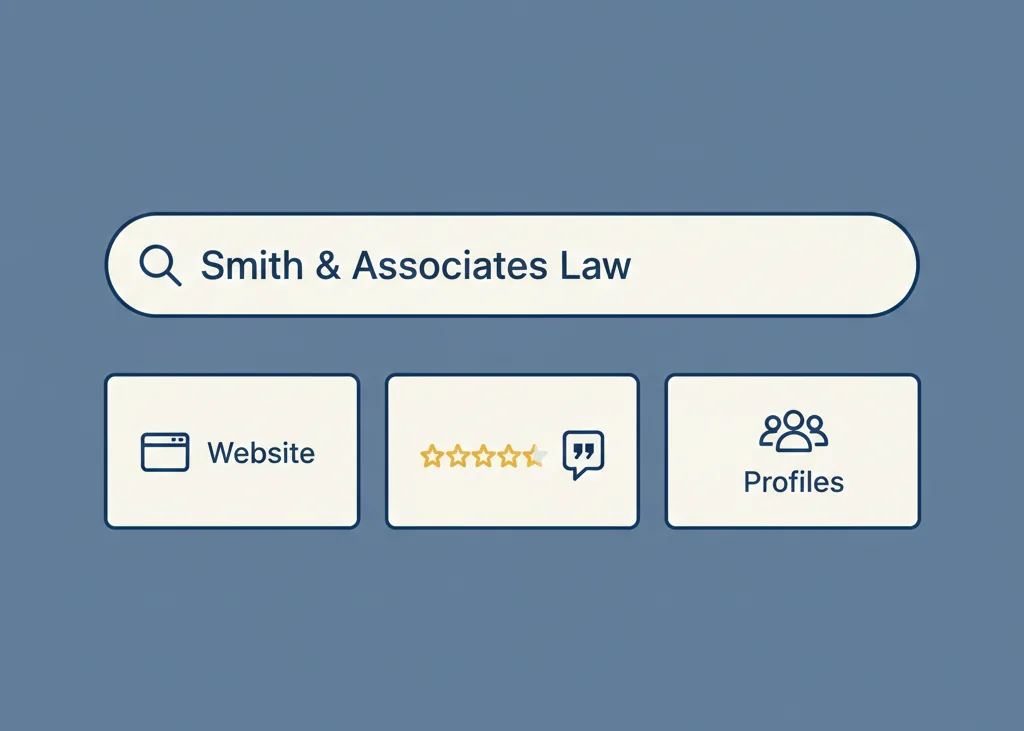
Your attorneys are your brand. When a potential client hears a name or gets a referral, the first thing they do is search for it. You need to control that Search Engine Results Page (SERP).
Ensure the first page of results is dominated by:
- Your official website’s Attorney Bio page.
- Your LinkedIn profile.
- Your high-authority legal directory profiles (Martindale, Avvo).
- Any reputable media mentions or press releases.
This is a defensive, high-trust SEO play. You’re building a digital firewall of credibility.
Architecting the Conversion-Focused Law Firm Website
A legal website isn’t a brochure, it’s a high-stakes intake form. Every page must be built to move the user toward one of two actions: calling or submitting a consultation form.
Hub-and-Spoke Structure: Building Practice Area Authority Clusters
This strategy is an organic way to prove E-E-A-T and internal linking structure.
- The Pillar (Hub): A deep, comprehensive guide on a major practice area. Example: The Complete Guide to Family Law in Texas. This page targets broad, high-volume terms.
- The Sub-Topics (Spokes): Individual, shorter articles that dive deep into a specific element of the pillar. Examples: How Texas Community Property Law Works, Texas Child Custody Mediation Process, or Alimony Laws in Dallas County.
Every spoke links back to the hub, and the hub links out to the spokes. This tells Google you are the definitive authority on the overarching topic.
Optimizing the Attorney Bio Page for E-E-A-T and Conversion (The Digital Interview)
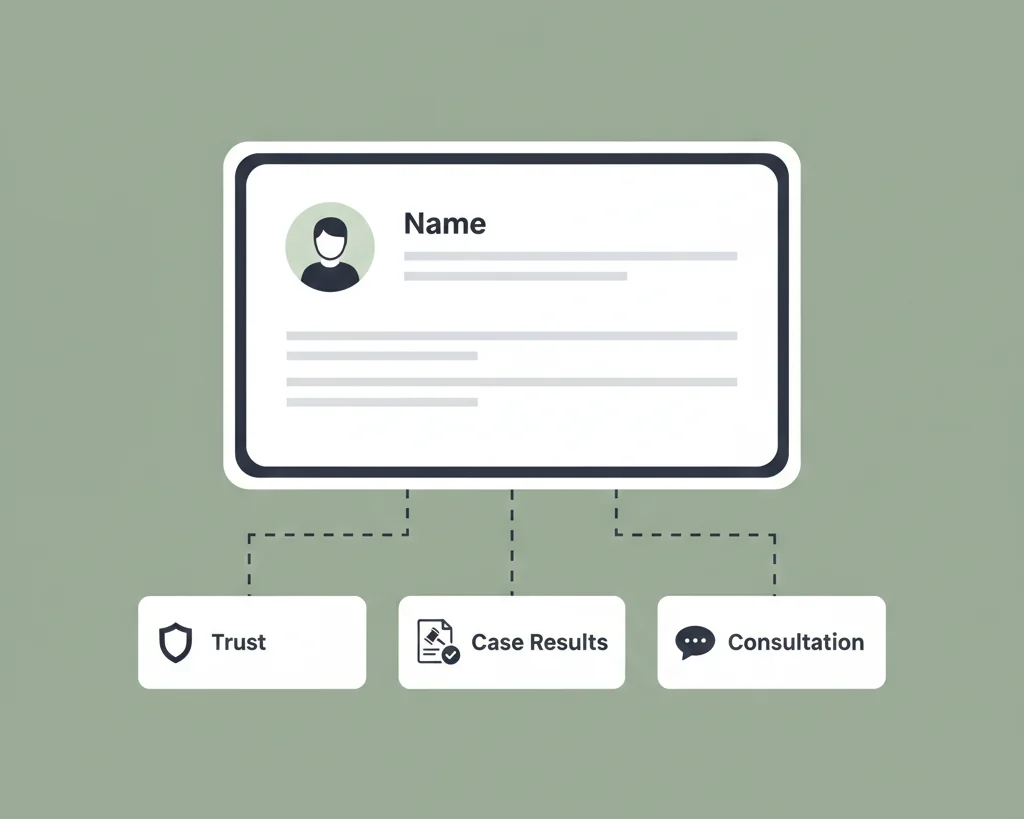
The attorney bio page is your most critical conversion asset. Potential clients are hiring the person, not the firm’s logo.
- E-E-A-T Signals: Include bar admissions, years of practice, specific case results (with disclaimers), law school, and any professional speaking engagements.
- The Conversion Hook: Place a prominent, high-contrast call-to-action (CTA) like “Schedule a Call with [Attorney Name]” right below the main biography. Don’t make them hunt for it.
Technical Requirements for Legal Authority
Technical SEO is the scaffolding for your E-E-A-T. If the site is slow or broken, it degrades user trust and your authority rating.
Structured Data Markup (Schema) for Legal Services and Organization
Using Schema Markup tells Google exactly what your content is about in a machine-readable format.
- Actionable Tip: Implement Lawyer and Organization Schema to mark up your attorney bios, location details, and firm name. For content, use Q&A and HowTo Schema to help your legal explainers get rich snippets in the SERP.
Ensuring Optimal Mobile Experience and Core Web Vitals
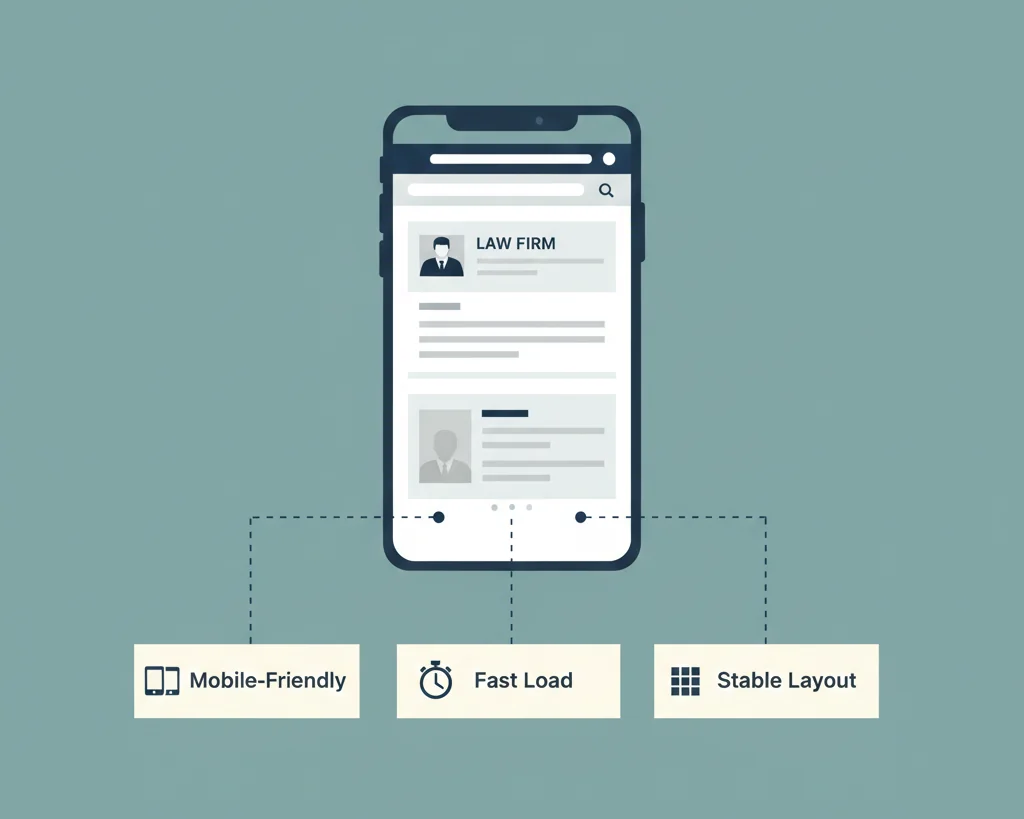
A potential client searching for a lawyer after an accident is likely doing it on their phone, maybe even from the side of the road. Your site must be blazingly fast and perfectly mobile-responsive.
Core Web Vitals like Largest Contentful Paint (LCP), Cumulative Layout Shift (CLS), and First Input Delay (FID) are foundational ranking factors. A slow mobile site is a conversion killer. Roughly 74% of law firms have a mobile-friendly site, but merely having one isn’t enough, it must perform flawlessly.
Phase 2: Content Strategy – Creating Definitive Legal Resources
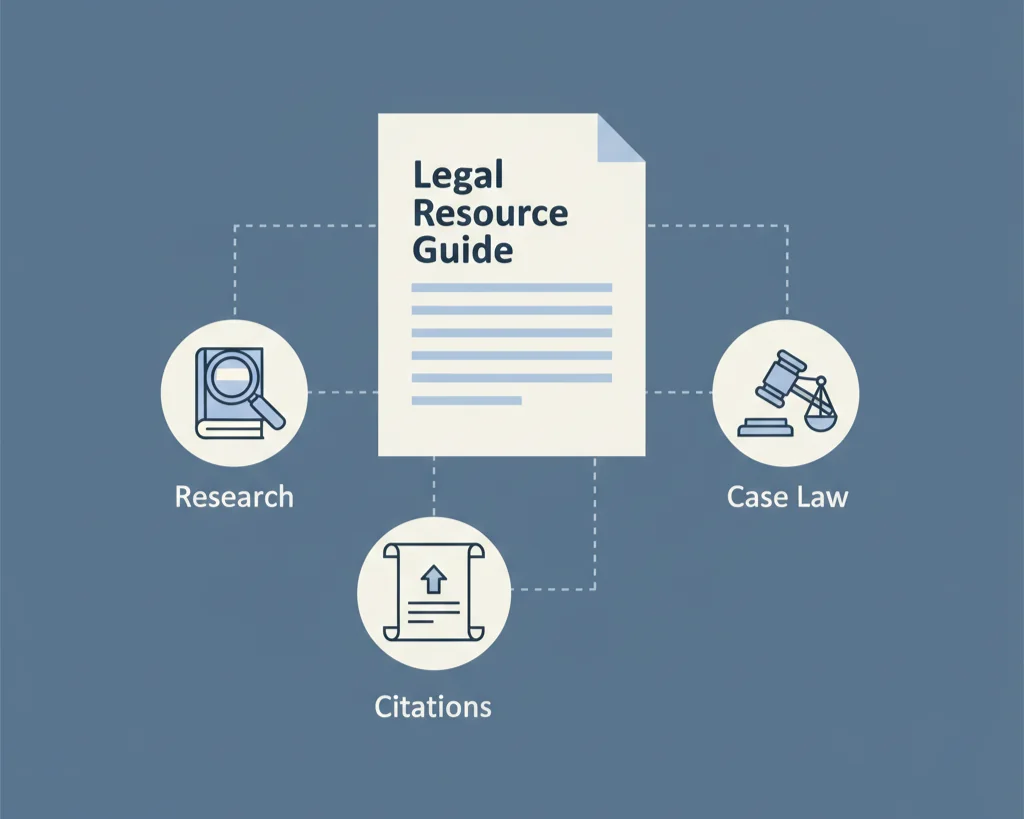
Stop writing for search engines and start writing for the person who has a pit in their stomach because they just got served papers.
The 10x Content Approach: Becoming the Definitive Guide in Your Niche
Don’t write the tenth article on what a DUI is. Write the definitive guide that’s ten times better than the next best competitor. Make it so thorough that a potential client reads it and thinks, “This person knows my problem better than I do.”
Creating Content That Solves the Reader’s Immediate Legal Crisis
Your content shouldn’t just define the legal term. It should guide the panicked user.
- Instead of: “Personal injury law is a legal area where the plaintiff seeks damages for harm…”
- Try: “The First 7 Things You Must Do Within 24 Hours of a Car Accident in Chicago to Protect Your Claim”
This is content that demonstrates immediate, practical Experience and provides clear, actionable steps.
Balancing Factual Accuracy with Emotional Empathy (Addressing Client Fears)

It’s easy for attorneys to sound cold or overly technical. But remember, the person reading is often scared, angry, or confused.
Use a conversational tone with contractions (you’ll, don’t, it’s) and acknowledge the emotional weight of their situation. You can be direct and opinionated about the law while being empathetic about the client’s feelings.
Essential Content Types for Client Acquisition
Practice Area Guides (The Deep-Dive Pillar Pages)
As mentioned, these are the hubs that establish your main authority. They need to be 3,000+ words of pure, unadulterated legal insight.
Jurisdictional-Specific FAQs and State Law Explainers
This is your local authority turbocharger. Create entire pages dedicated to answering questions specific to your city, county, or state.
- Example: “Can I file for divorce in Travis County, Texas if my spouse lives out of state?” (The answer is specific to that jurisdiction, making it highly valuable to a local searcher.)
Case Studies and Verdict Summaries (Ethical Presentation of Experience)

This is your moment to prove your experience, but you must be careful. Ethically presented case studies focus on the legal complexity and the strategic solution your firm provided. They must include mandatory disclaimers and avoid making any guarantees.
Integrating Video and Multimedia Content (2026 Readiness)
Text is great, but video builds trust and E-E-A-T faster than anything else.
YouTube SEO for Legal Explainer Videos and Attorney Q&As
Video is the perfect format for showcasing the human behind the law degree.
- The Strategy: Use YouTube to host high-quality, 3–5 minute videos of your attorneys answering common client questions. The titles should be optimized for both Google and YouTube search.
- Example: A video titled “What Happens at a Preliminary Hearing for a DUI in [County Name]” builds both expertise and local relevance.
Phase 3: Local SEO and Off-Site Authority (The Link and Review Game)
This is the messy, real-world work that separates the winners from the pretenders.
Mastering Your Google Business Profile (GBP)
Your GBP is the centerpiece of your local SEO strategy. You need to fill out 100% of the profile fields and keep it active. Businesses with a complete GBP are 70% more likely to attract visits from potential clients, according to Google.
Advanced GBP Optimization for Multi-Location Firms and Satellite Offices
Each office needs its own unique listing, verified at that physical address. Do not use virtual offices, or you’ll get dinged. Ensure the NAP (Name, Address, Phone Number) is identical across every listing for that specific office. Even a slight variation in the street abbreviation (St. vs Street) can confuse Google’s system.
Leveraging GBP Posts, Services, and Q&A to Capture Local Traffic
Use GBP Posts like mini-blog entries to announce case wins (ethically), new services, or firm news. Answer the Q&A section with genuine, useful legal information. These are all subtle trust and relevance signals.
Building a Scalable and Ethical Review Acquisition System
98% of users would read online reviews of an attorney before hiring them. This is huge. You need a system that consistently generates new, positive reviews.
Generating Reviews Across Google, Yelp, and Legal Directories (Avvo, Martindale)
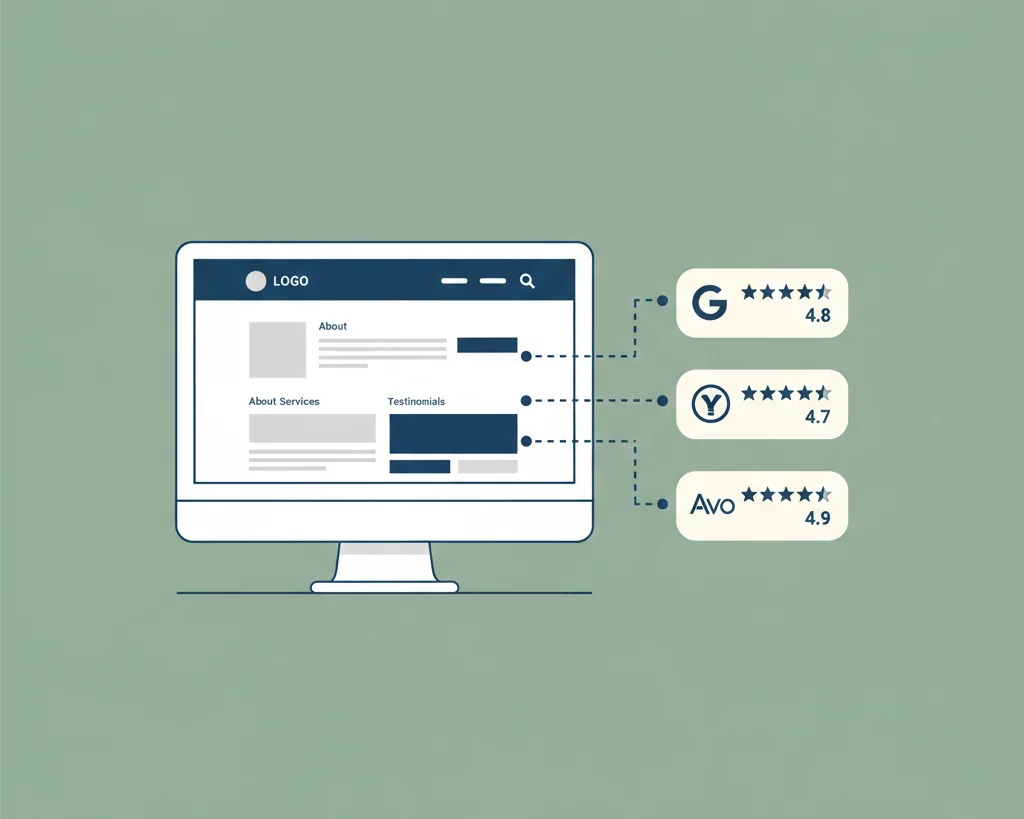
- The Process: After a case is closed and the client is happy, ask them. Send a direct, personalized email with a link to your Google Business Profile review page.
- The Ethics: You cannot compensate clients for a testimonial (Rule 7.2(b)). You can only ask for genuine feedback.
Strategies for Ethically Managing and Responding to All Feedback
You must respond to every review, good or bad.
- Positive: Thank them and mention the practice area to reinforce your E-E-A-T.
- Negative: This is the tricky one. Do not engage in a client-attorney dispute in public. Respond professionally, apologize that they had a less-than-ideal experience, and offer a private channel to discuss their concerns, without ever violating client confidentiality.
Link Earning: Securing Backlinks from High-Trust Sources
Forget buying links. It’s a temporary sugar rush followed by a devastating Google penalty. We are focused on Link Earning.
Target Link Sources: Bar Associations, Non-Profits, Local News, University/Law School Mentions
Focus your outreach efforts on genuine, high-authority sites.
- Example: Did one of your partners volunteer for a local non-profit or speak at a continuing legal education (CLE) event? Reach out to that organization and ask for a link back to the attorney’s bio page or the firm’s CLE resource page.
The Dangers of Low-Quality Link Schemes in the Legal Industry
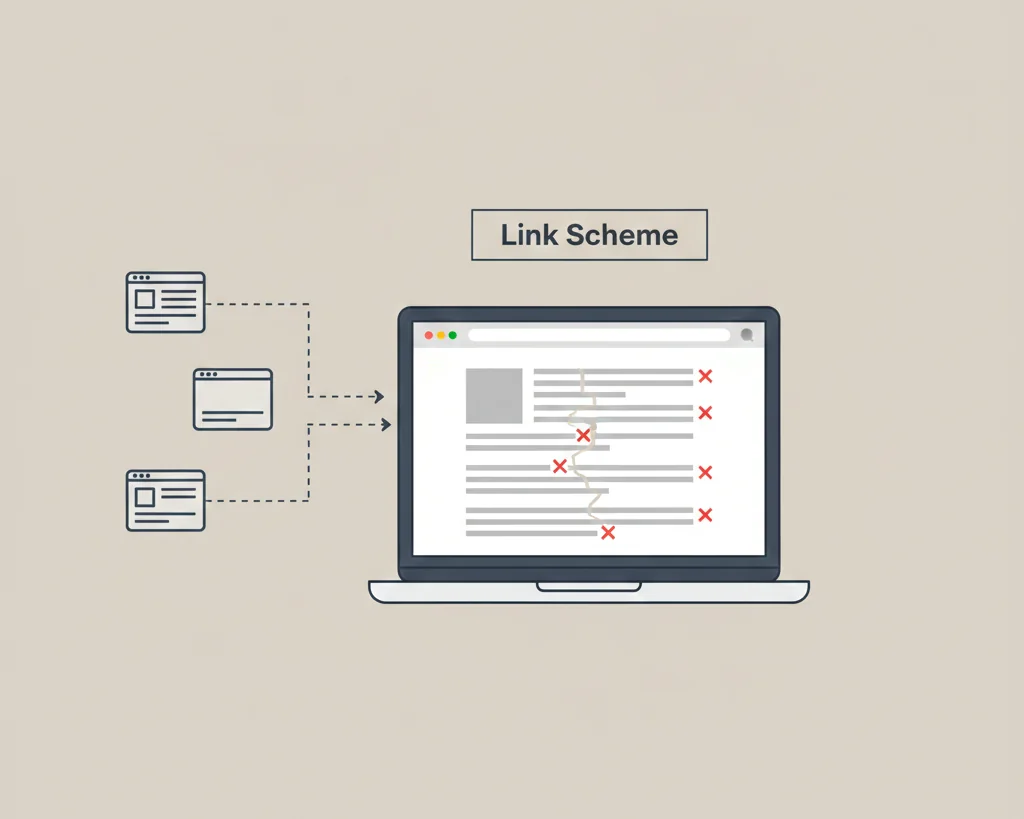
Link farms, guest posting networks, and PBNs (Private Blog Networks) are a massive risk in the YMYL space. The penalty can set your firm’s SEO back years. It’s not worth it.
Citation Consistency: Verifying NAP Across the Top 50 Legal Directories
Consistency is a minor detail that Google uses to build major trust. Use a local SEO tool to verify that your Name, Address, and Phone Number are exactly the same across the top 50 local and legal directories. If they differ, it creates an uncertainty signal that hurts your local rankings.
Measuring Success: From Clicks to Signed Retainers
If your SEO agency is reporting on traffic and rankings alone, fire them. Those are vanity metrics. A lawyer cares about one thing: new clients and revenue.
Key Performance Indicators (KPIs) That Matter to Law Firm Owners
The real KPIs are the ones that affect the balance sheet.
Tracking Cost Per Lead (CPL) and Cost Per Acquisition (CPA – Signed Case)
This is the holy grail. You need to know exactly how much you spent on SEO to generate one client.
- Cost Per Lead (CPL): Total SEO Spend / Number of Form Submissions & Calls
- Cost Per Acquisition (CPA): Total SEO Spend / Number of Signed Retainers
The average conversion rate for the legal industry is a competitive 7.5% from visitor to lead, according to some analysis by FirstPageSage. You need to be actively tracking that rate and striving to beat it.
Analyzing User Journey Flow: From Search to Contact Form Submission
Use Google Analytics 4 (GA4) and call tracking software to map the exact journey of a lead.
- Did they: Search the keyword → Land on the Practice Area Page → Click the Attorney Bio → Fill out the Contact Form?
- Identify the drop-off points. If users are leaving your contact form, maybe it’s too long or asks for too much sensitive information too soon.
Conversion Rate Optimization (CRO) for Lawyers
CRO is about making the process of hiring you ridiculously easy.
Optimizing Contact Forms, Click-to-Call Buttons, and Live Chat Features
- Forms: Ask for only the necessary information (Name, Email, Phone, Brief Case Summary). Reduce the number of fields.
- Click-to-Call: Make phone numbers large, high-contrast, and hyper-clickable on mobile. 66% of legal call conversions come from organic search so you need to make that call easy.
- Live Chat: Implement a live chat or chatbot system that offers instant connection. This is a crucial conversion booster for the late-night, panicked searcher.
Site Speed and Accessibility as Conversion Factors
As mentioned earlier, speed is trust. The difference between a 2-second load time and a 5-second load time can be the difference between a high-value lead and a bounce. Optimize your images, leverage browser caching, and audit your code.
Law Firm SEO in the Future: Preparing for AI and SGE

The landscape is changing fast. The emergence of Generative AI in search means you can’t just rely on information anymore.
How Google’s Search Generative Experience (SGE) Will Impact Legal Search
SGE will provide direct, summarized answers to user questions right at the top of the search results, bypassing the 10 blue links.
- The Threat: If a user asks “What is the statute of limitations for personal injury in California,” SGE will likely provide the answer. This could decrease clicks to your informational content.
- The Opportunity: SGE will still rely heavily on the most authoritative, E-E-A-T-laden sources for its facts. If you are the clear authority on a topic, SGE may cite your firm in its generative answer, giving you a powerful new form of high-trust visibility.
The Role of AI in Legal Content Creation (Research Assistant, Not Writer)
AI is fantastic for summarizing case law, drafting initial outlines, or identifying missing subtopics in your pillar content. It’s a phenomenal research assistant.
It is NOT a replacement for the attorney writing the final content. To prove Experience and Expertise you need the human nuance, the lived detail, and the personal authority that AI simply can’t fake.
Why Undeniable E-E-A-T Will Be the Ultimate SGE Firewall
When SGE surfaces an answer to a legal question, it will be looking for the site that is the least likely to give dangerous or incorrect advice. Your undeniable, verified, and transparent E-E-A-T profile is your primary defense mechanism against being relegated to a page-two link. Trust will become the ultimate ranking factor.
Strategic Decisions: Hiring an Agency vs. In-House SEO
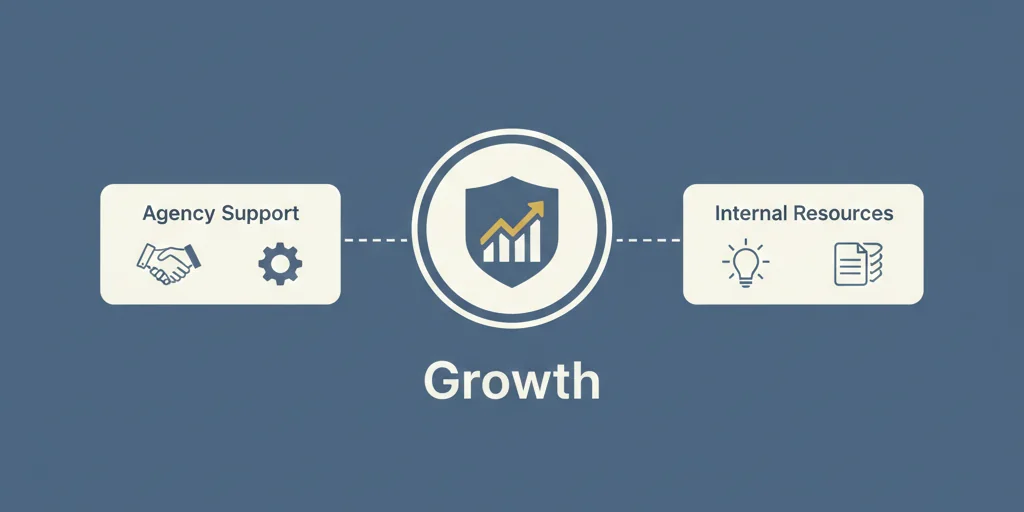
You’re a lawyer, not a full-time SEO expert. Do you hire an agency, or hire someone internally? It’s a critical business choice.
Detailed Cost Analysis and Expected Resource Investment
- Agency: High monthly retainer (often $5k to $25k+ depending on the market and firm size). Benefits are immediate, specialized, full-stack expertise and access to high-end tools (Ahrefs, SEMrush). Downside is the potential for ethical lapses if you hire a cheap, non-specialized firm.
- In-House: High annual salary plus benefits (easily $80k+). Benefits are total control, deep integration with the firm’s strategy, and institutional knowledge. Downside is the long ramp-up time and the risk of a single point of failure for all your digital marketing.
The Vetting Process: 7 Critical Questions to Ask a Prospective Legal SEO Agency
If you choose to outsource (and 83% of law firms hire outside teams for marketing), you need to vet them carefully. Don’t hire a generalist agency.
- Can you name the ABA Model Rules most relevant to digital advertising?
- How do you ensure NAP consistency across our various satellite offices?
- What is your strategy for generating ethical backlinks in the legal space?
- Show us an example of a competitor site where you’ve successfully implemented Schema markup for legal content.
- What KPIs do you use that go beyond traffic and directly measure CPA (Cost Per Acquisition) of a signed retainer?
- Are you familiar with the nuances of State Bar rules for my specific state?
- What is your policy regarding the use of AI for content creation?
Conclusion: Your Blueprint for High-Value Client Acquisition
Law Firm SEO is hard. It’s expensive. And it takes time. But the return on investment can be astronomical. Firms that succeed treat their website not as a digital billboard, but as a virtual senior partner that operates 24/7. They understand that every page is a reflection of their integrity, their experience, and their willingness to help.
By focusing on deep, undeniable E-E-A-T, meticulous local optimization, ethical link earning, and ruthlessly tracking the CPA of a signed case, you’ll build a digital presence that not only ranks well but converts at a premium.
Final Actionable Takeaways for Immediate Implementation
- Audit Your Bio Pages: Add more verifiable credentials, awards, and ethically presented case results to every attorney bio.
- Verify Your GBP: Log into your Google Business Profile and ensure it’s 100% complete and that your firm’s name, address, and phone number are identical to what’s on your website.
- Check Your Disclaimers: Make sure your content disclaimers are prominent, clear, and included on any high-stakes content like case results or informational blog posts.