

When you’re spending good money on a digital marketing channel, the first thing you want to know is, “When can I stop bleeding cash and start signing clients?”
You didn’t become a lawyer by being patient, I get it. You’re used to setting a court date and having an immediate action plan. But SEO, especially for a law firm, doesn’t work on a court calendar. It’s more like a years-long case with a massive, life-changing verdict at the end.
If you’re looking for a quick, definitive answer, here it is: You’ll see initial, non-revenue-driving results in 3-6 months, and you should expect significant, qualified leads and a positive ROI within 9-12 months. Anything faster for a competitive market is a lie, a fluke, or a terrible strategy that will eventually get you burned.
This isn’t just me talking. It’s what Ahrefs, Moz, and pretty much every sane expert who has run a campaign in the cutthroat legal space will tell you. We’re going to walk through the exact, painful, rewarding timeline, month-by-month, and look at the real factors that make your campaign fast or painfully slow.
The Hard Truth: Why Legal SEO Takes Longer Than Other Industries
I might be wrong, but I’m going to go out on a limb and say you don’t sell T-shirts or dog food. You provide life-altering, high-stakes legal services. That simple fact fundamentally changes the SEO game.
The YMYL Factor: Why Google is Slow to Trust Law Firms
This is where your legal background comes in handy because the stakes are incredibly high. Google lumps law firms into a special category called YMYL, or Your Money or Your Life. That includes legal advice, medical advice, and financial guidance.
Think about it. Google doesn’t want to rank some random, two-month-old website with no authority for “What to do after a car accident” or “best divorce lawyer.” The advice has a direct impact on a person’s life, liberty, or assets.
Because of this, Google holds legal sites to an incredibly high bar for what we call E-E-A-T (Experience, Expertise, Authoritativeness, and Trustworthiness). The “Google Sandbox” for legal sites isn’t a sandbox at all, it’s more like a heavily guarded fortress. You can’t just slap up a page and expect to be let in. You have to prove, consistently, over a long time, that you are the real deal.
The Competition Saturation Problem
Here’s where I’d probably mess this up if I rushed the budgeting phase. The cost-per-click (CPC) for high-value legal keywords like “personal injury lawyer NYC” or “mass tort attorney” are among the highest in the world for a reason. They lead to big cases and big fees.
This high value drives massive competition. You’re not just competing with the other local firm down the street. You’re up against:
- Massive national directories and aggregators.
- Highly capitalized, multi-office regional firms with dedicated, seven-figure marketing budgets.
- PPC specialists dominating the top half of the page, forcing you to fight for a tiny slice of the organic pie.
When you’re fighting established domains that have been building links for 10-15 years, your six-month timeline is essentially a crawl, not a sprint.
SEO is a Compounding Asset, Not a Quick Fix
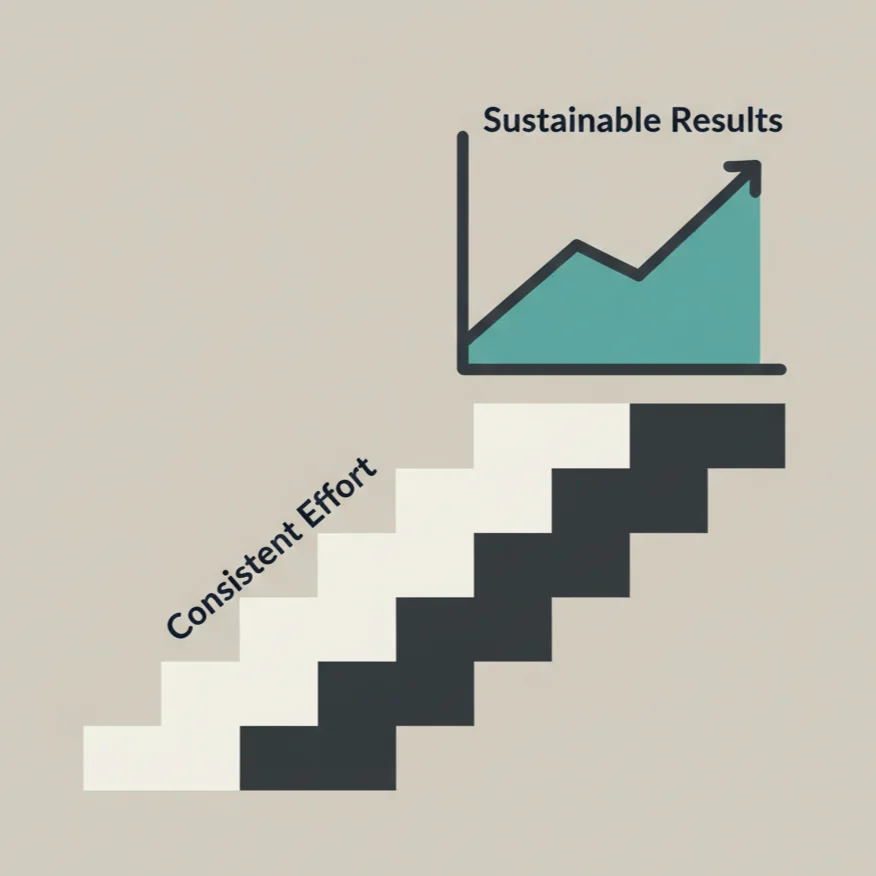
Honestly, this part trips people up all the time. People often treat SEO like they treat a radio ad. Put the money in, get a call back tomorrow. It doesn’t work that way.
The better analogy is to view SEO as planting a vineyard versus PPC as buying a lottery ticket. You buy a PPC ticket, and you might get a quick win today, but tomorrow you have to buy another ticket. With SEO, you plant the vines, you care for the soil (technical foundation), you prune the plants (content optimization), and you water them (link building). You won’t get any grapes this year, maybe not even next year. But once the vineyard matures, you have a massive, sustainable harvest that keeps producing for decades with minimal ongoing effort. That’s domain authority.
The Realistic Law Firm SEO Timeline: Month-by-Month Expectations
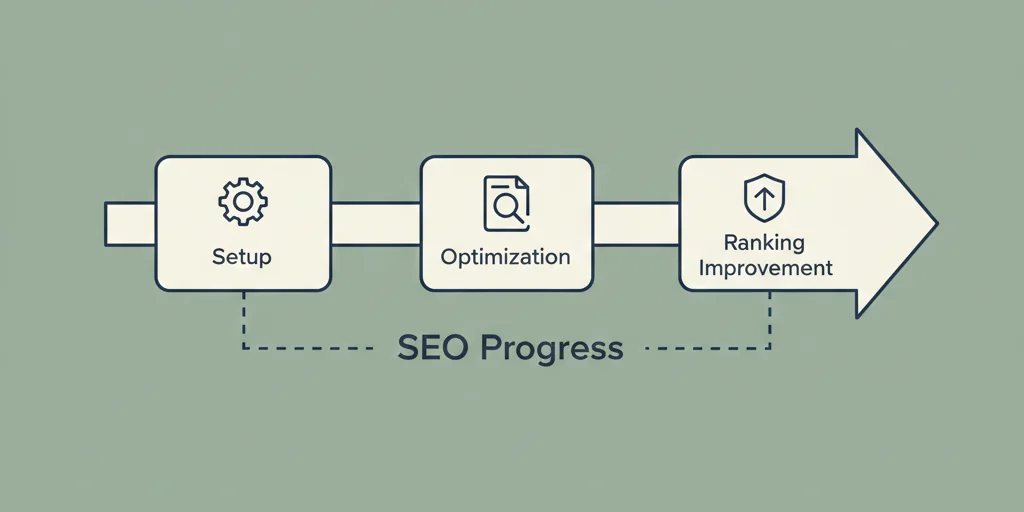
You need a clear roadmap so you can measure progress and not feel like you’re throwing money into a black hole. Here’s a pragmatic, stage-based view of the 12-month journey.
Phase 1: Months 1-3 – The Quiet Foundation (The Audit & Build)
Your focus here is all on getting the site structurally sound and laying the groundwork. This phase is slow, quiet, and absolutely non-negotiable.
| Focus Area | Deliverables | Expected Results (KPIs) |
| Technical SEO | Comprehensive site audit, site speed improvements, proper crawl budget management, mobile-friendliness fix. | Site speed improvements, first pages indexed by Google, zero significant traffic growth. |
| Strategy & Content | Deep keyword mapping, creation of the Ideal Client Profile, Google Business Profile (GBP) audit/optimization, first 5-10 core practice area pages drafted. | Improvement in Google Search Console Impressions. Your pages are being seen, but not yet ranking well enough to be clicked. |
| Why it feels slow | We’re fixing years of tech debt and teaching Google what your firm is about. | Your phone is not ringing because of SEO. Don’t expect it to yet. |
Phase 2: Months 4-6 – Gaining Traction (The First Wins)
This is the phase of hope. You finally start seeing the fruits of your labor, but don’t confuse traffic with revenue.
| Focus Area | Deliverables | Expected Results (KPIs) |
| Content Execution | Consistent publishing schedule (e.g., 4-8 informational blog posts/month) focused on long-tail questions (e.g., “statute of limitations for a slip and fall in Texas”). | Organic Traffic growth (50-100% initial jump) primarily for informational/long-tail keywords. |
| Local SEO | Aggressive citation cleanup and consistency (NAP), review generation strategy execution, geo-specific landing pages built. | Noticeable increased visibility in the Google Map Pack. |
| Link Building | Initial, low-hanging fruit link outreach (local sponsorships, unlinked brand mentions, high-quality local directories). | Rankings move from Page 5 to Page 2-3 for less competitive, specific terms. |
Phase 3: Months 7-12 – Momentum to Revenue (The Payoff)
This is when the ROI conversation gets exciting. You transition from showing Google you’re worthy to actually challenging the entrenched competitors.
| Focus Area | Deliverables | Expected Results (KPIs) |
| Authority Building | Aggressive link acquisition (guest posting, digital PR, resource page links) with a focus on high Domain Authority sites. | Rankings on Page 1 for core, mid-to-high competition practice area keywords (e.g., “Houston Car Accident Lawyer”). |
| Conversion Focus | Conversion Rate Optimization (CRO) audit on landing pages. Optimization of calls-to-action (CTAs), lead forms, and on-page chat. | Significant increase in Qualified Leads/Case Consultations. First Positive ROI emerges. |
| Content Refinement | Updating and improving initial content, aggressively targeting “featured snippets.” | SEO becomes a measurable, predictable channel for case intake. |
Phase 4: 12+ Months – Sustained Market Dominance (Scaling)
Now you’re playing offense, not defense. You own the high-value terms and are looking to expand your footprint.
The Focus: Defending rankings, expanding topical authority, and geographic expansion into new, profitable areas. SEO becomes the primary source of high-quality leads, delivering a steady, predictable case flow that costs far less per acquisition than PPC.
Critical Factors That Accelerate or Decelerate Your SEO Timeline
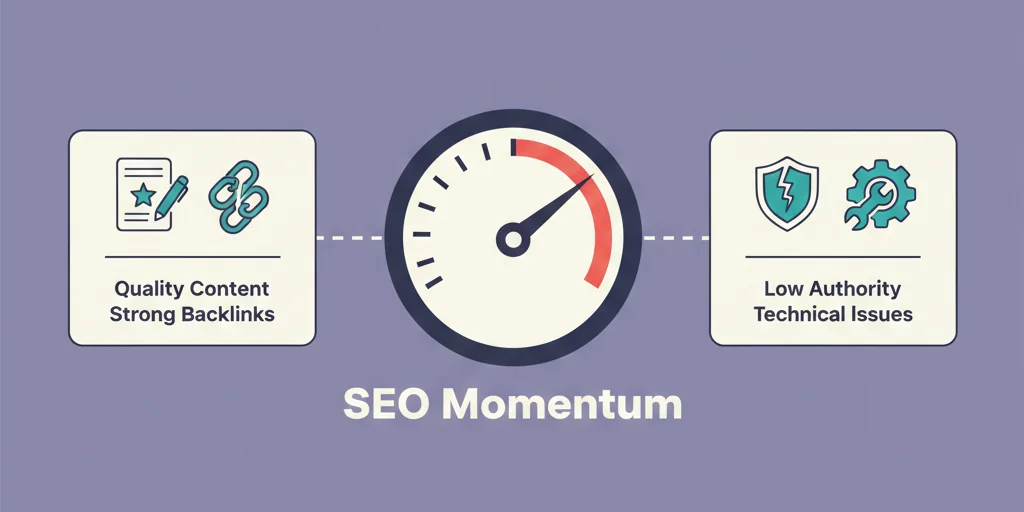
The timelines above are averages. Your results might be faster or slower based on four key levers.
1. Starting Point: New Domain vs. Established Authority
If you’re launching a brand new website or a site on a domain with a history of penalties, assume an extra 3-6 months. Google has zero trust in you.
On the flip side, if you have an existing, well-aged domain that has simply been neglected, it has old, non-optimized content, maybe a few good links, and a clean history, you’ve got a massive advantage. You’re skipping the “trust building” phase and jumping straight into the “optimization” phase. My previous experience suggests that a cleanup can cut the initial timeline by as much as a quarter.
2. Budget and Resource Commitment
I don’t have the exact number, but most reports I’ve seen from firms like SEMrush show a direct correlation between investment and speed.
Imagine two firms:
- Firm A: The $3k/month Budget: This covers a single SEO strategist, one blog post per month, and a handful of local citations. Their link building is minimal. The timeline is slow, and they’ll be celebrating Page 2 rankings at 12 months.
- Firm B: The $8k/month Budget: This funds a dedicated strategist, a conversion rate specialist, 6-8 new content pieces a month, and an aggressive, high-quality link building campaign. They are out-competing Firm A and the bigger firms on sheer velocity. They will likely hit the Page 1 revenue goals between months 7 and 9.
You can’t skip the time Google needs to re-crawl you, but you can increase the quality and quantity of content and links to reduce the time it takes to see the payoff.
3. Market and Practice Area Competition
The timeline is wildly different depending on where you are and what you do.
If you’re a rural Estate Planning firm in a county of 50,000 people, you’re almost certainly going to hit Page 1 and generate leads in 3-6 months because your local competition is doing little to no SEO.
If you’re an Injury Attorney in Chicago, Miami, or Los Angeles, where the top 10 firms are all spending six figures annually on marketing, then you should realistically expect the 12-month timeline to be the minimum for major case volume. That’s just the reality of the game. You have to focus on long-tail keywords (“best workers compensation lawyer for warehouse accidents in Chicago”) for quick wins to fund the long game.
4. The Quality of Your E-E-A-T Signals
This is the lawyer-specific accelerator.
Your attorneys need to be actively involved. Pages that have a lawyer listed as the author, with a detailed, verified bio, a headshot, and links to their Bar profile will instantly build more trust with Google than a generic corporate page. Lawyers who write their own content (even if it’s heavily edited by an SEO writer) or record videos explaining a topic are demonstrating Experience and Expertise. That speeds things up dramatically. The direct link between quality, consistent reviews (especially on your Google Business Profile) and Local SEO ranking speed is undeniable. Google sees your happy clients and decides you are Trustworthy.
Identifying Early Wins: How to Know Your SEO is Working Before the Phone Rings
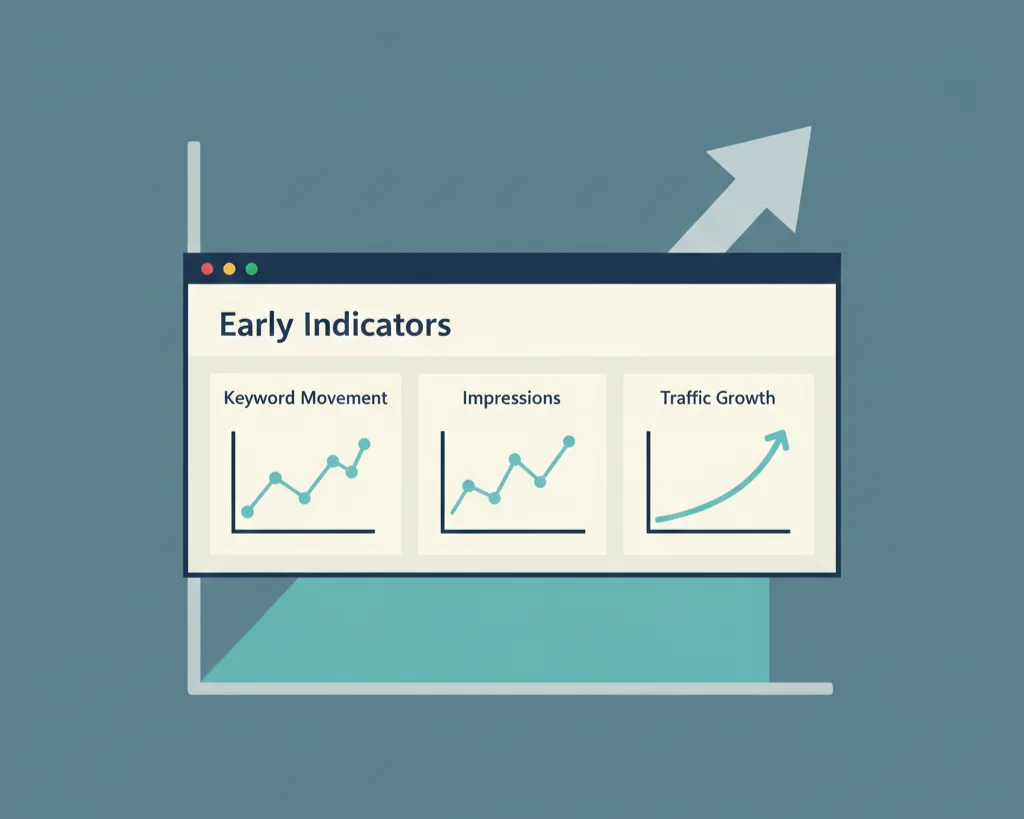
Lawyers are metrics-driven. You’re investing capital and you need to see a return. Waiting 12 months for a final verdict is tough. This section is all about the leading indicators that prove your strategy is sound, even if the cases haven’t rolled in yet.
Here’s the tricky part: don’t obsess over vanity metrics. Focus on these actionable signals in the first 6 months:
- Impressions: This is the earliest signal. It means Google has seen your page and is considering ranking it for a query. If Impressions are rising in Google Search Console, your pages are finally in the conversation.
- Average Position Improvement: Tracking a key term (e.g., “Houston Personal Injury Lawyer”) moving from Page 10 to Page 4 is a massive win. You haven’t made any money yet, but you just beat 60 other firms.
- Clicks on Informational Content: If you’re seeing traffic spikes on your “What is…” or “How to file…” posts, it means you’re building topical authority. That informational traffic often flows into your high-intent commercial pages via your internal linking structure.
- Google Business Profile Views & Actions: Increased views, more map pack appearances, and higher clicks to call or website on your GBP profile show your local SEO is hitting hard. Local SEO is often the fastest track to a signed case.
- Backlink Velocity: The number of high-quality, relevant links secured per month. If your link builder is consistently acquiring strong links, you know that authority signal is being pumped into your site, which will pay off in rankings within the next 30-60 days.
The Ultimate Comparison: SEO vs. PPC for Law Firms
You’re probably running both or considering both. It’s important to understand why the timeline differences are so stark.
| Feature | SEO (Organic Search) | PPC (Paid Search) |
| Initial Cost | High (for strategy, content, links) | Low (just the ad spend) |
| Time to Results | 6-12 months for significant revenue | 1-2 weeks for immediate leads |
| Cost Per Lead | Starts high, drops dramatically over time | Consistently high, driven by competition |
| Control | Low (Google decides your rank) | High (You control budget, bid, and message) |
| Long-Term Value | Creates a compounding, long-term asset (Domain Authority) | Zero long-term asset value (turn off the tap, all leads stop) |
The difference is clear: SEO is an upfront investment in a growing, sustainable asset. PPC is a recurring operational expense for instant, temporary control.
The Smart Hybrid Strategy for Lawyers
Unless you have zero budget, you shouldn’t pick one. The best firms use a hybrid strategy.
Use PPC to generate immediate cash flow and high-intent leads for your most profitable practice areas. This keeps the lights on, proves the concept, and funds the long-term SEO strategy. Meanwhile, your SEO team builds the sustainable, lower-cost organic channel. Once your SEO is consistently ranking, you can slowly scale back your PPC spend, replacing expensive ad clicks with free organic clicks.
Conclusion: Your Law Firm’s Next Step in the SEO Journey
How long does SEO take? The answer, for a law firm, is longer than you want, but faster than you think is possible once you hit the tipping point.
Expect 3-6 months for initial visibility and traffic on informational keywords. Plan on 9-12 months before you see a steady stream of qualified, high-value leads and achieve a positive return on your investment. In the toughest markets, you’ll need the full 12 months or more.
The only way to speed this up isn’t by rushing or cutting corners, it’s by maximizing your commitment to quality. You must commit to superior content, aggressive and ethical link building, and, most importantly, leveraging the E-E-A-T that only a real law firm can provide.
It’s a marathon, not a sprint. But honestly, in a competitive legal market, marathon finishers are the only ones who get to raise the trophy.