

It’s 2026. If you open Twitter (or X, or whatever we’re calling it this week), your feed is probably drowning in noise about “Autonomous Agents,” “AGI,” and GPT-5.
I get it. The shiny new toys are exciting.
But here is the thing nobody wants to admit at the cocktail parties: We are still running our businesses on the engine that started it all.
You cannot understand the modern search landscape without understanding GPT-3.
When GPT-3 first dropped back in 2020, it absolutely terrified SEOs. I remember the panic. We thought our jobs were toast. Today, it isn’t the terminator we feared. It’s the operating system of our entire industry.
“GPT-3 SEO” isn’t just about generating text anymore. If you are just using it to write blog posts, you are doing it wrong. It is about building scalable, intelligent systems that analyze data, predict intent, and structure information way better than any human team could do manually.
This guide is going to walk you through how the foundational principles of GPT-3 are applied right now, in 2026, to dominate the “Dual Economy” of search. That means ranking in Google’s traditional blue links and showing up in those AI Overviews.
Let’s get into it.
The Evolution: From GPT-3 to “Agentic SEO”
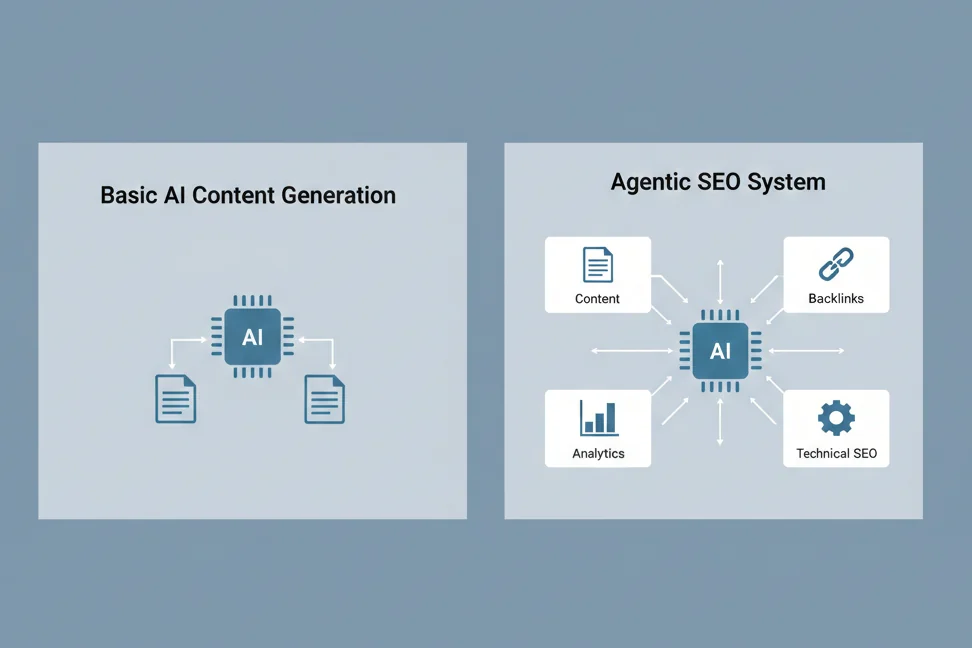
Back in the day, SEO was about keyboards. You sat down, you typed, you hit publish.
GPT-3 shifted the game from keyboards to prompts.
But here is where it gets interesting. You might assume that because we have GPT-5 or sophisticated Agents now, the older models are obsolete.
They aren’t.
In fact, the smartest SEOs I know are still using “GPT-3 class” models (like gpt-3.5-turbo or similar lightweight iterations) for 90% of their workflow.
Why? Token Economics.
If you are processing 50,000 keywords, you don’t need a PhD-level AI like GPT-5 to categorize them. That is overkill. It’s like hiring a brain surgeon to mow your lawn. It’s too expensive and frankly, slow.
For high-volume tasks, the older, lighter models are the secret weapon. They are fast, dirt cheap, and perfect for the grunt work that makes Programmatic SEO (pSEO) possible.
1. Using GPT Models for “Architectural” SEO
Most people think “content” when they hear AI. I want you to think “structure.”
This is where I’d usually mess this up if I rushed. I’d start generating paragraphs immediately. But the real gold is in the analysis.
Intent Classification at Scale
Imagine you have a spreadsheet with 10,000 keywords.
In the old days, you’d spend a week manually tagging them as “Commercial” or “Informational.” Or you’d pay a VA to do it and pray they understood the nuance.
Now, you pump that list through the API with a simple prompt.
You tell the model: “Look at this keyword. Is the user trying to buy something, learn something, or go somewhere? Label it.”
It takes seconds. Suddenly, you have a perfectly segmented content calendar.
The “Topical Map” Builder
This is a personal favorite. You can use AI to reverse-engineer a competitor’s site structure.
Feed the AI your competitor’s sitemap (or a list of their H1s). Then ask it to find the “missing nodes.”
“Based on these 50 articles about ‘Indoor Gardening,’ what 10 sub-topics are missing that would make this authority complete?”
It finds the gaps you didn’t even know existed.
Code Generation (No Dev Required)
I am not a coder. I look at Python scripts and my eyes glaze over.
But with GPT-3 class models, I can write complex schema markup (JSON-LD) for a local business in about thirty seconds.
I can write a script to scrape my own 404 errors.
You don’t need to learn to code. You just need to learn to ask for the code.
2. The “Human-Sandwich” Content Workflow
Okay, let’s talk about writing.
If you are copying and pasting raw AI output onto your site in 2026, you are asking for a penalty. Google’s “SpamBrain” is way too smart for that.
Plus, users hate it. We have all read those articles that sound like they were written by a robot trying to describe a sunset. It’s hollow. It has that “Generic Voice” that makes people bounce immediately.
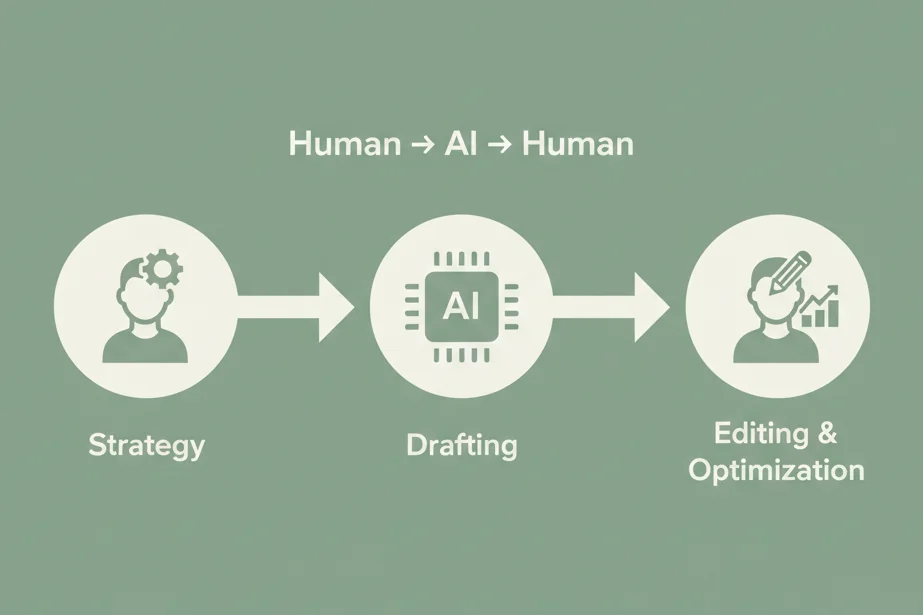
The fix isn’t to stop using AI. It’s to change the workflow. I call it the Human-Sandwich.
Layer 1: The Human (The Bread)
This is you. You set the strategy. You provide the unique data points. You decide the emotional hook.
“We are targeting exhausted moms who need a 5-minute dinner recipe.”
The AI doesn’t know that feeling. You do.
Layer 2: The AI (The Meat)
This is where GPT-3 steps in. You give it your hook and your data, and it does the heavy lifting. It drafts the structure. It formats the bullet points. It ensures the keyword density isn’t totally out of whack. It does the boring part.
Layer 3: The Human (The Other Bread)
You come back in. You fact-check (crucial). You add the “Experience” part of E-E-A-T.
“I tried this spatula and the handle melted.”
An AI can’t tell you that. That little detail is what signals to Google, and your reader, that a human is home.
3. Programmatic SEO (pSEO) with GPT-3
This is where the money is made.
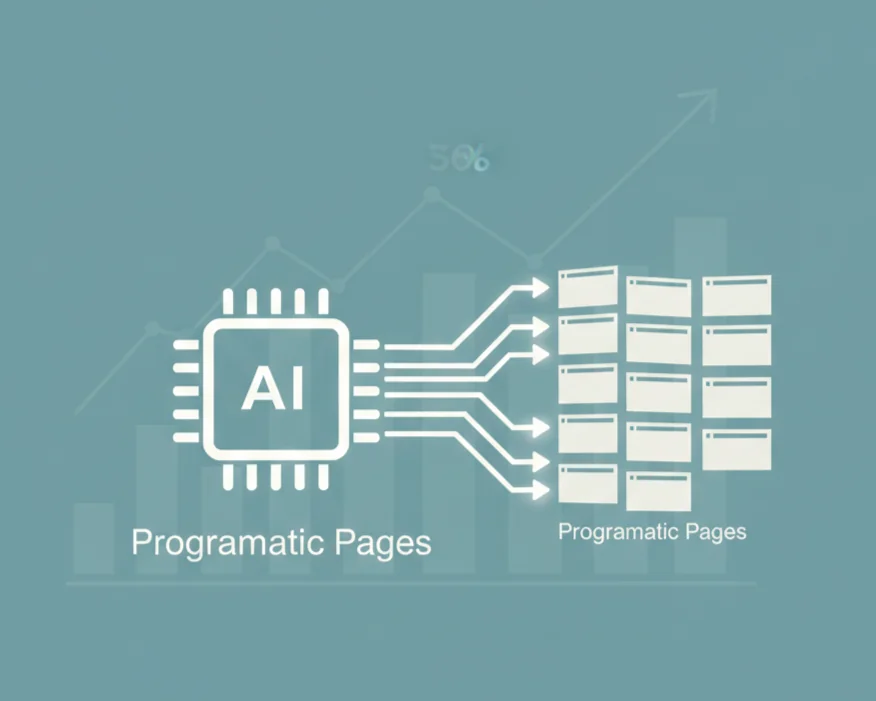
Programmatic SEO is the art of creating thousands of unique landing pages based on a database. Think TripAdvisor or Yelp.
“Best SEO Agency in Austin”
“Best SEO Agency in Denver”
“Best SEO Agency in Miami”
If you write these manually, you will lose your mind.
If you duplicate the text and just swap the city name, Google will deindex you for duplicate content.
Enter GPT-3.
You use the model to write a unique introduction and a unique conclusion for every single one of those 5,000 pages. You feed it parameters from your database (like the city population or local landmarks) so the text actually makes sense.
Because you are using the lighter, faster models, this costs pennies. You are essentially printing traffic.
4. Optimizing for “Answer Engines” (SearchGPT & Gemini)
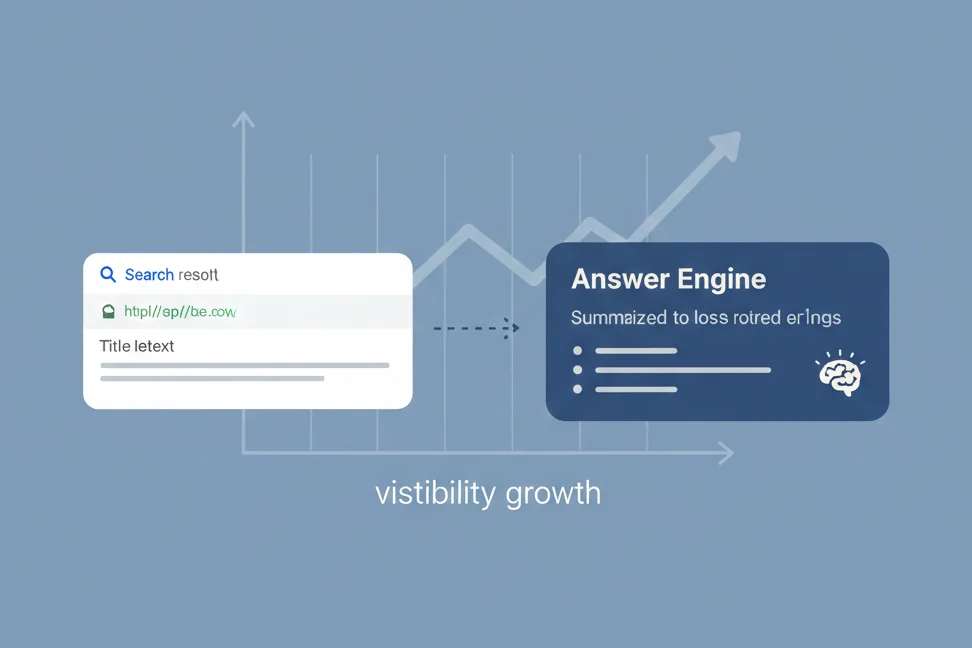
Search has changed. We aren’t just hunting for “Blue Links” anymore. We are looking for citations in an AI answer.
If you want SearchGPT or Gemini to recommend you, you have to structure your content the way a bot reads it.
Here is the kicker: How GPT-3 reads text is exactly how SearchGPT reads text.
They are cousins.
So, stop burying the lead. Use the “Inverted Pyramid” style.
If the query is “How long to boil an egg?”, do not give me a 500-word story about your grandmother’s farm.
Start with: “Boil a soft-boiled egg for 6 minutes and a hard-boiled egg for 9 minutes.”
Give the direct answer immediately.
This increases your chances of being the “Featured Snippet” or the source the AI cites in its overview.
5. Risks & Red Flags in 2026
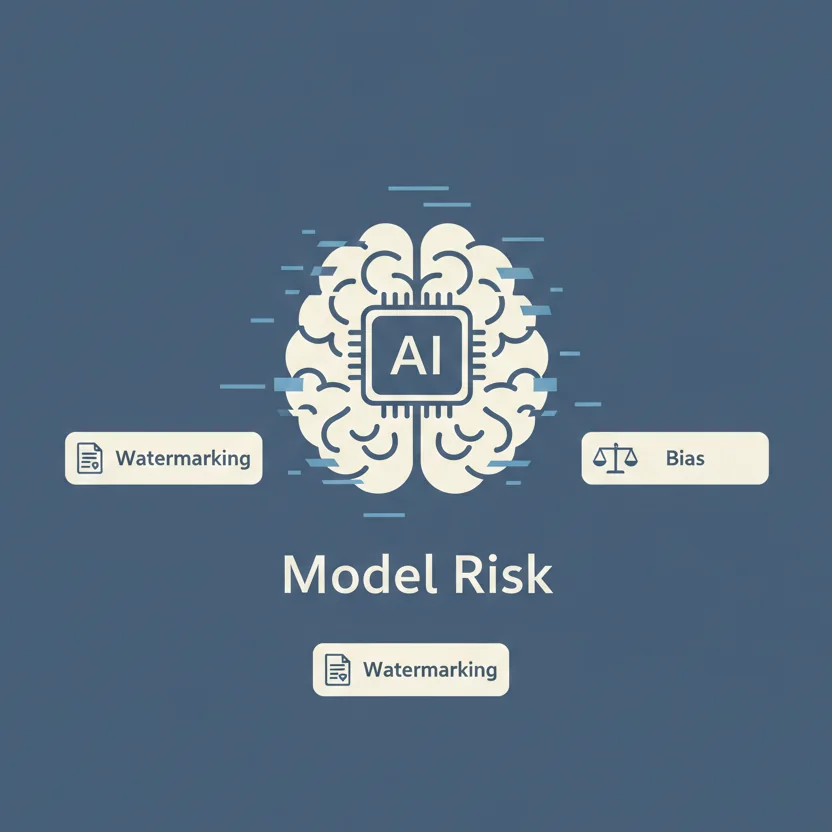
I’d be lying if I said this was risk-free. There are traps everywhere.
The “Hallucination” Trap
Never, and I mean never, let an LLM write facts, statistics, or quotes without checking them. It will lie to you with total confidence. It will invent a study from 2024 that never happened. If you publish that, your credibility is gone.
Model Collapse
This is a weird one. If you train your content on other AI-generated content, the quality degrades fast. It becomes a copy of a copy of a copy. Keep your inputs fresh and human-sourced.
Watermarking
Search engines are getting better at detecting lazy content. They look for specific patterns, sentence length uniformity, overuse of certain transition words (you know the ones), and lack of information gain.
6. Best Prompts for SEO Tasks (The “Mega-Prompts”)
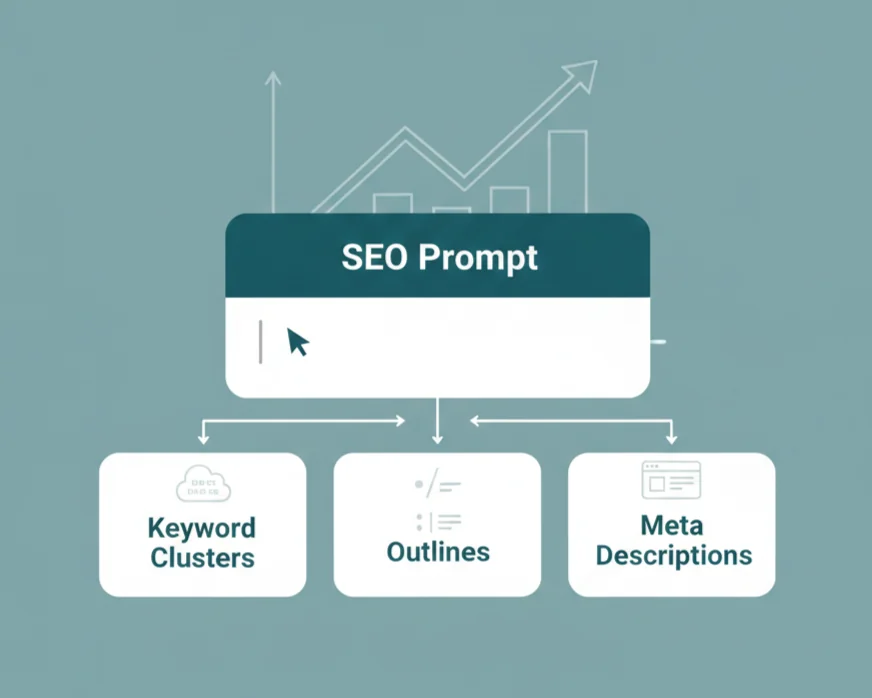
I don’t believe in “magic prompts,” but these frameworks work.
The Audit Prompt
“Act as a Google Quality Rater. Read this article and grade it for E-E-A-T (Experience, Expertise, Authoritativeness, Trustworthiness). Be harsh. Tell me exactly what is missing that would make a user trust this page less.”
The Cluster Prompt
“Take the seed keyword ‘organic coffee.’ Generate 20 semantically related sub-topics. Do not include the exact phrase ‘organic coffee’ in the sub-topics. Focus on related entities like brewing methods, bean origins, and roasting levels.”
The Title Prompt
“Generate 10 click-worthy titles for this draft. The audience is busy startup founders. Include a ‘Power Word’ in each title. Keep them under 60 characters.”
Conclusion: The Tool, Not The Craftsman
At the end of the day, GPT-3 and its successors are just power drills.
A power drill makes holes a hell of a lot faster than a hand crank. But the drill doesn’t know where to put the hole. If you drill into a pipe, you’re going to have a bad day.
The best SEOs in 2026 aren’t the ones who just click “Generate.” They are the ones who have mastered the art of directing the AI. They know where to drill.
So, don’t fear the engine. Just make sure you’re the one holding the wheel.
What’s your take? Are you still refining your prompts, or have you handed the keys over to the agents entirely? Let me know in the comments.