

The SEO industry is noisy. Like, really noisy.
It is 2026. The barrier to entry for starting an “agency” is effectively zero dollars and a willingness to hustle. Anyone with a ChatGPT subscription and a LinkedIn account can claim to be an expert.
This makes your job harder.
Finding a vendor is easy. You can find twenty of them on Upwork before you finish your morning coffee. But finding a true partner? That is where things get messy.
You don’t need someone who just sends you a PDF report of keyword rankings once a month. Rankings are vanity metrics if they don’t turn into cash.
You need a strategic partner who understands how SearchGPT, Google’s AI Overviews, and traditional search algorithms intersect to drive revenue. Not just traffic. Revenue.
This guide is your vetting playbook. I am going to strip away the jargon and help you identify an agency that actually moves the needle.
I might be wrong, but I think this is the most important hire you will make this year.
What Does an SEO Specialist Agency Actually Do in 2026?
If you haven’t looked for an agency in a few years, you might be surprised. The role has changed.
Back in the day, SEO was mostly about stuffing keywords into page titles and buying shady links.
Today? It is more like Revenue Operations.
A modern SEO specialist agency sits at the intersection of technical performance, content strategy, and PR.
Here is what the work actually looks like now:
- Technical Health: They ensure your site is crawlable for bots and fast for humans. If your site takes 5 seconds to load, no amount of good content will save you.
- Content Strategy: This isn’t just blogging. It is creating assets for traditional search and AI Answer Engines (AEO). They answer questions better than anyone else.
- Authority Building: Real authority comes from Digital PR and high-level citations. We are talking about getting mentioned in industry publications, not just spammy forum links.
- Data Analysis: This is the big one. They should be connecting traffic data to your actual CRM sales data.
Honestly, if an agency isn’t asking for access to your sales data or Google Analytics 4 (GA4) setup in the first meeting, that is a bad sign.
Specialist vs. Generalist: Which Do You Need?
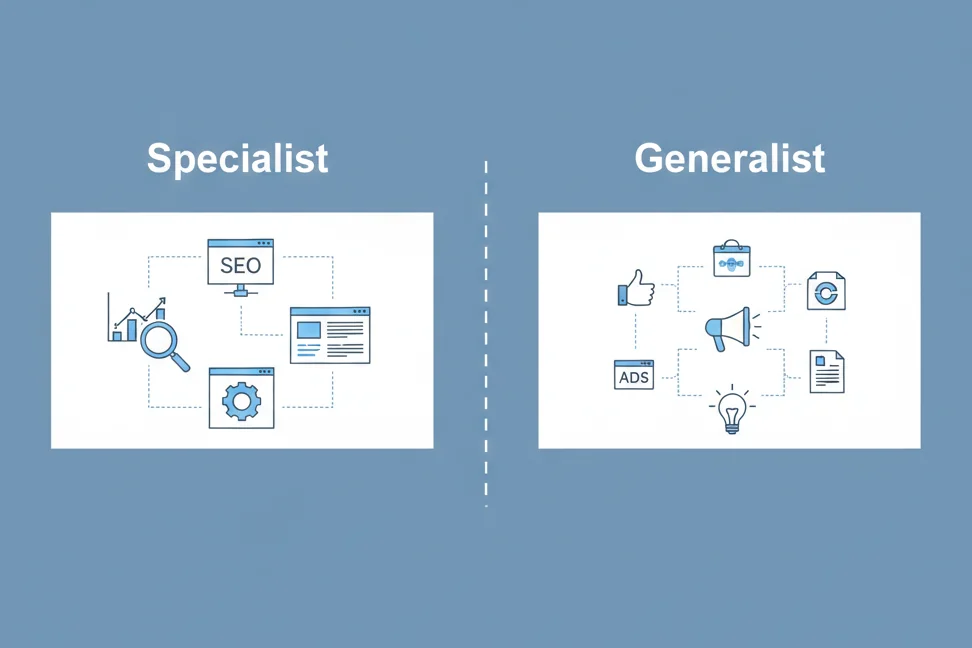
Here is where I see business owners mess up all the time.
They hire a “full service” digital marketing agency that claims to do everything. Web design, social media, PPC, email marketing, and… oh yeah, SEO.
Usually, the “SEO” portion of that contract is just an intern installing a plugin and hitting “save.”
If you want real results, you usually need a specialist.
The Types of Specialist Agencies
- SaaS/B2B: These folks focus on lead quality and demo requests. They understand long sales cycles. They know that a blog post might not convert a user today, but it puts your brand in the running for a purchase six months from now.
- Ecommerce: These agencies live and breathe technical structure. They focus on category pages, merchant center feeds, and making sure thousands of product pages don’t cannibalize each other.
- Local SEO: If you are a plumber or a dentist, you need this. It is all about Google Business Profiles and “Near Me” visibility.
- Enterprise: This is for the big dogs. It is less about “growth hacks” and more about governance, managing legacy code, and large-scale migrations without tanking traffic.
The Vetting Process: 5 Critical Questions to Ask
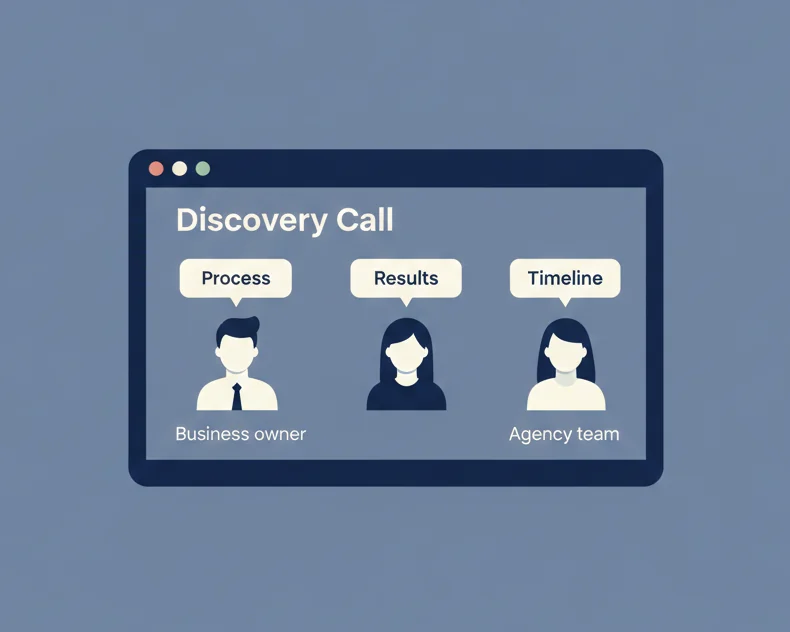
This is the part most people skip. They look at the pricing, nod at the presentation, and sign the contract.
Don’t do that.
You have to grill them. Here are five questions that will reveal if they are legit or just good at sales.
1. “What is your philosophy on AI content?”
This is the elephant in the room.
Good Answer: “We use AI for research, outlining, and data analysis. But humans write and verify everything to ensure it meets Google’s E-E-A-T standards.”
Bad Answer: “We use AI to publish 100 pages a day on auto pilot to dominate the niche.”
If they rely entirely on AI without human oversight, you are building your house on sand. Google’s spam updates will eventually catch up.
2. “How do you measure success?”
If they say “Rankings,” run.
Rankings fluctuate daily. They are not a business goal.
Good Answer: They should talk about organic traffic growth, conversions, revenue attribution, and Share of Voice. They should care about the metrics that pay your bills.
3. “Can you explain your link building strategy?”
Link building is still a massive ranking factor. It is also the easiest way to get penalized if done wrong.
You want to hear about:
- Digital PR
- Content marketing that earns links naturally
- Guest posting on reputable industry sites
You do not want to hear about:
- Private Blog Networks (PBNs)
- Buying links on Fiverr
- Link farms
4. “Do you have experience with Generative Engine Optimization (GEO)?”
We are in 2026. Users aren’t just clicking blue links anymore. They are reading the AI summary box at the top of the search results.
Ask them how they optimize for that. If they look at you with a blank stare, they are living in the past.
5. “Who will actually be working on my account?”
This is the classic “Bait and Switch.”
You get sold by the charismatic CEO or the VP of Strategy. Then, once you sign, your account is handed off to a junior associate who learned SEO last week.
Insist on meeting the actual account manager before you sign.
Red Flags: When to Run Away

I have seen enough horror stories to spot these a mile away.
Guarantees.
“Guaranteed #1 Rankings in 30 Days!”
This is always a scam. No one controls Google. Even Google engineers can’t guarantee a #1 ranking. It is literally against Google’s own guidelines to claim this.
Secret Strategies.
“We have a proprietary method we can’t show you.”
Nope. Transparency is non negotiabale. If they can’t explain what they are doing in plain English, they are likely doing something shady.
Cheap Fixed Packages.
“$500/month for Gold SEO Package.”
SEO is labor intensive. Good content costs money. Good links cost time. For $500, you are getting automated reports and maybe some spam links that will hurt you later.
Ownership Clauses.
Some agencies try to own the analytics accounts or the website changes they make. Never agree to this. You must own your data and your website.
Pricing Models: What Does Quality SEO Cost in 2026?
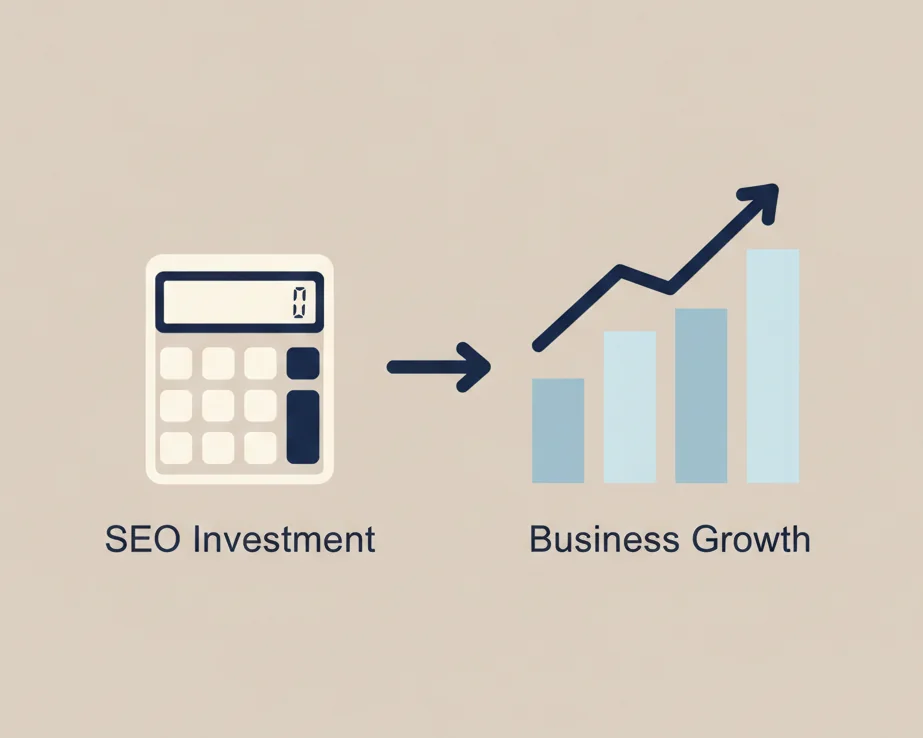
Let’s talk money.
I don’t have the exact number for your specific business, but here is what the market generally looks like for quality work.
Monthly Retainer ($2,000 to $10,000+)
This is the industry standard for long term growth. It usually includes a mix of technical maintenance, content creation, and link acquisition. For a competitive niche, you are looking at the higher end of that range.
Project Based ($3,000 to $15,000)
Best for specific audits, migrations, or technical setups. Once the project is done, the contract ends.
Performance Based
Some people love the idea of “pay for performance.” You only pay if you rank.
I’d avoid this. It incentivizes the agency to target obscure, low volume keywords just to say they got you to #1. It focuses on vanity metrics, not revenue.
Budget Allocation
A good agency will be transparent about where the money goes. Roughly speaking, it often breaks down like this:
- 20% Strategy & Management
- 40% Content Production
- 40% Link Acquisition & PR
The “First 90 Days” Roadmap
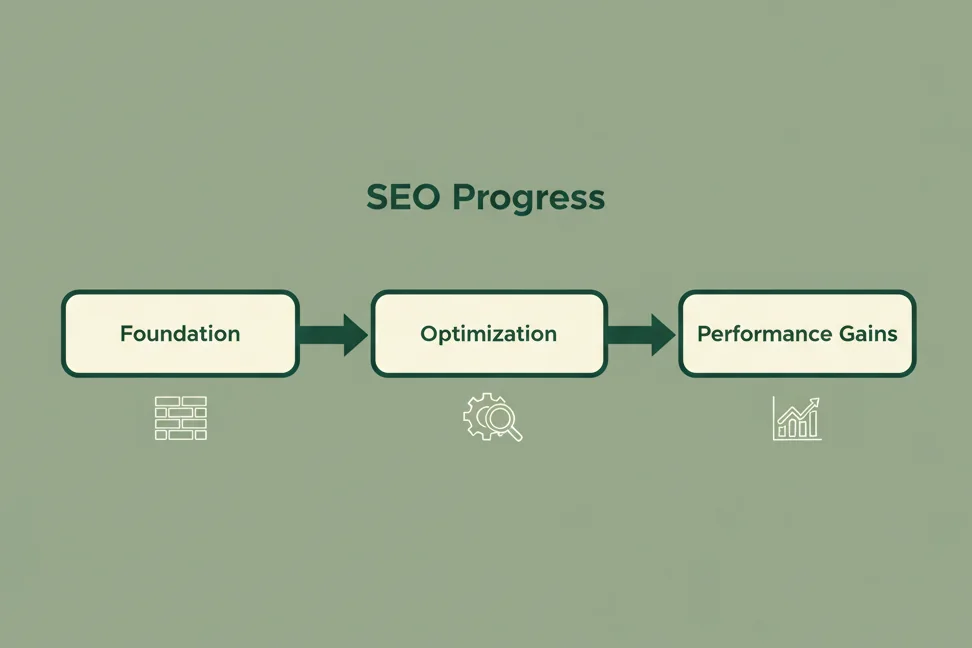
Here’s what usually happens in real life when you onboard a new partner.
Month 1: The Audit & Foundation
It is boring but necessary. They will fix technical errors, set up tracking (if your GA4 is a mess), and run a deep competitor analysis.
Month 2: The Strategy & “Low Hanging Fruit”
They should identify pages that are ranking on page 2 or bottom of page 1 and optimize them to get quick wins.
Month 3: Momentum
This is where the new content campaigns launch. You start seeing the authority building kick in.
If an agency tells you they will double your traffic in month one, they are lying. SEO is a compound interest game, not a lottery ticket.
Tools & Tech Stack
You shouldn’t have to pay extra for tool subscriptions. Your agency should already have the enterprise level tools.
A pro agency will have access to:
- Ahrefs or SEMrush for keyword research and backlink analysis.
- Screaming Frog for technical crawling.
- Surfer or Clearscope for content optimization.
- Google Search Console (obviously).
If they are asking you to buy a subscription to these tools for them, that is weird.
Conclusion: Hiring a Partner, Not a Vendor
Hiring an SEO agency is scary. You are handing over the keys to your digital reputation.
But if you follow this vetting checklist, you are already ahead of 90% of your competitors.
Look for transparency. Look for a focus on revenue. And look for people who admit they don’t know everything but have a plan to figure it out.
My previous experience tells me that your gut instinct is usually right. If the sales pitch feels too slick or the promises feel too big, walk away.
There are great agencies out there. You just have to dig a little to find them.