

In 2026, “SEO” doesn’t just mean begging Google for a spot on page one. It means optimizing for intelligence.
If you are strictly optimizing for ten blue links, you are fighting a war that ended two years ago. We have officially entered the era of the Dual Economy of Search.
It looks like this:
- The Architect: You use OpenAI’s advanced models (like GPT-5 or Deep Research) to build, audit, and fix your strategy faster than a human team could.
- The Arena: You fight for visibility inside SearchGPT and OpenAI’s “Deep Research” citations.
If you’re still only using ChatGPT to write boring blog intros, you are falling behind. Seriously. You are bringing a spork to a gunfight.
This guide covers the complete ecosystem of OpenAI SEO. From the technical controls for the OAI-SearchBot to earning that sweet, sweet “cited source” spot in an LLM answer.
Part 1: OpenAI as the “Arena” (Optimizing for SearchGPT)
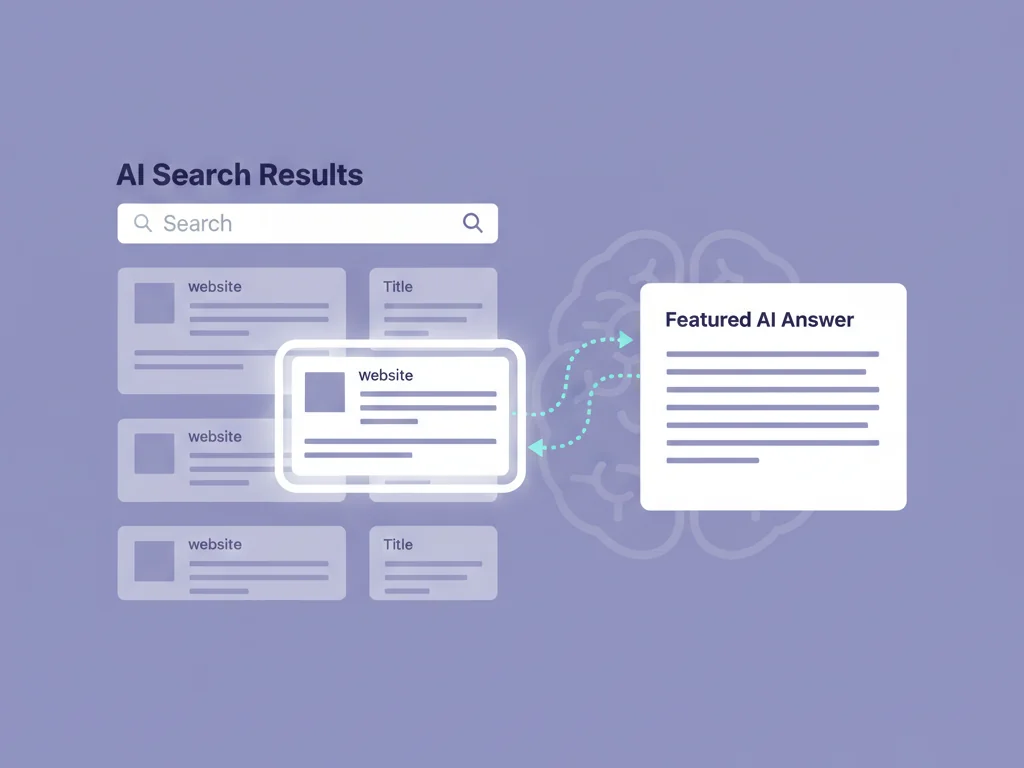
The Shift: From Blue Links to Synthesized Answers
Here is the hard truth most SEOs don’t want to admit. Users don’t want to visit your website.
They want an answer.
We used to call this “Zero-Click” search. Now it is just… search. The interface is the destination.
In this environment, your new KPI isn’t just “Organic Traffic.” It is Brand Visibility and Citation Frequency. You want to be the entity the AI references when it constructs an answer.
SearchGPT and Google’s AI Overviews operate differently. Google is still trying to save its ad revenue. OpenAI’s ranking logic prioritizes directness and semantic match over how many random backlinks you bought on Fiverr.
Technical SEO for AI Bots
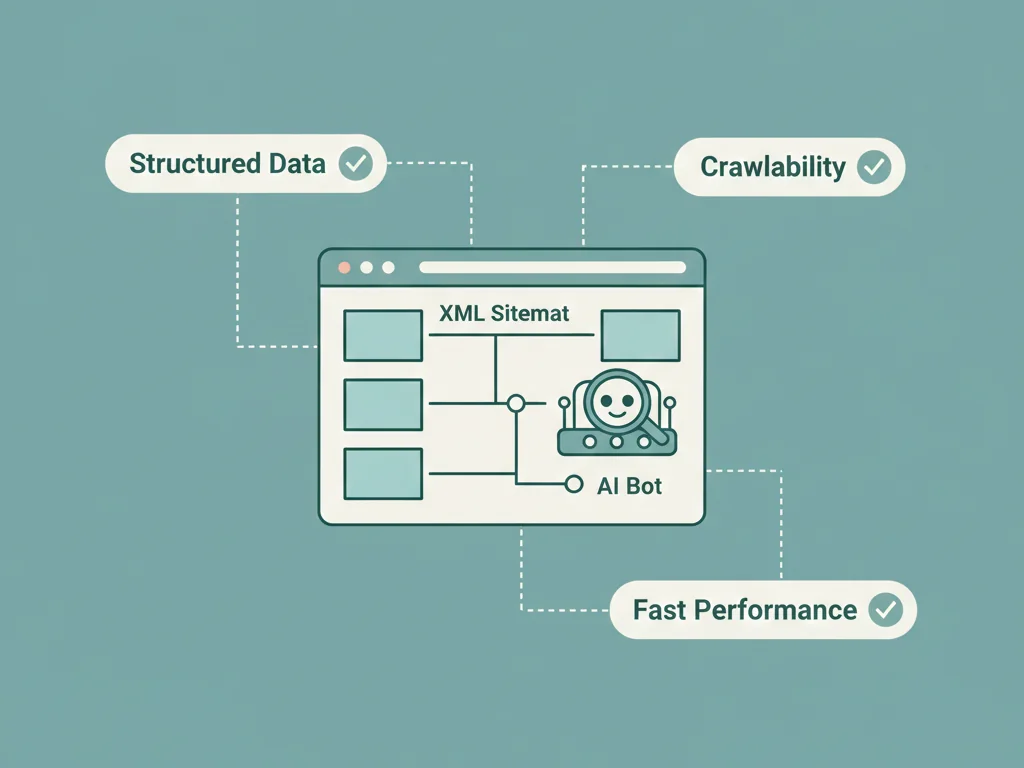
You can’t optimize for a bot that can’t see you. But you also don’t want them stealing your proprietary data to train their models without giving you credit.
It’s a balance.
Controlling the Crawler
You need to understand the difference between the bots.
- OAI-SearchBot: This is the search crawler. It surfaces your content in SearchGPT. You generally want this allowed if you want traffic.
- GPTBot: This crawls data to train the models. Allowing this helps the model “know” you exist long-term, but it doesn’t guarantee a link back.
Here is where I’d probably mess this up if I rushed.
I’ve seen people block all OpenAI agents in their robots.txt because they are scared of AI theft. Then they wonder why their traffic from SearchGPT is zero.
If you have public marketing content, let OAI-SearchBot in. If you have a proprietary database or sensitive client info behind a login (that somehow isn’t secure), block GPTBot.
Context Windows & Content Structure
LLMs have limited attention spans, just like us.
“Fluff” is death here. If you write a 2,000-word post where the actual answer is buried in paragraph 14, the LLM will likely skip you. It prefers structured data it can easily parse and synthesize.
How to format for the machine:
- Use clear headers: H2s and H3s should be questions or clear topics.
- Data Tables: LLMs love tables. They are easy to tokenise.
- Schema.org: Use JSON-LD. It’s like feeding the bot with a silver spoon.
Actionable Tip: I always put a “Direct Answer” summary right after the H1 or the first H2. It’s basically a TL, DR. It helps humans, and it spoon-feeds the bot exactly what it needs to cite you.
The “Citation Economy”: How to Get Cited
Getting cited isn’t about keyword stuffing. It is about being the primary source.
SearchGPT favors recognized industry experts. This is basically the evolution of E-E-A-T (Experience, Expertise, Authoritativeness, and Trustworthiness).
Digital PR & Brand Mentions
Think of this as the new link building.
You want your brand mentioned in high-authority news outlets that feed the model’s “Deep Research” mode. When the New York Times or a major industry blog mentions you, the LLM trusts you more.
Unique Data is King
If I could give you only one piece of advice, it would be this. Publish original data.
LLMs are trained on existing knowledge. They are hungry for new facts.
- Run a survey.
- Analyze your own internal data.
- Publish a case study with real numbers.
If you are the source of the statistic, the AI has to cite you. If you just curate other people’s stats, you get ignored. It’s that simple.
Part 2: OpenAI as the “Architect” (Using AI to Do SEO)
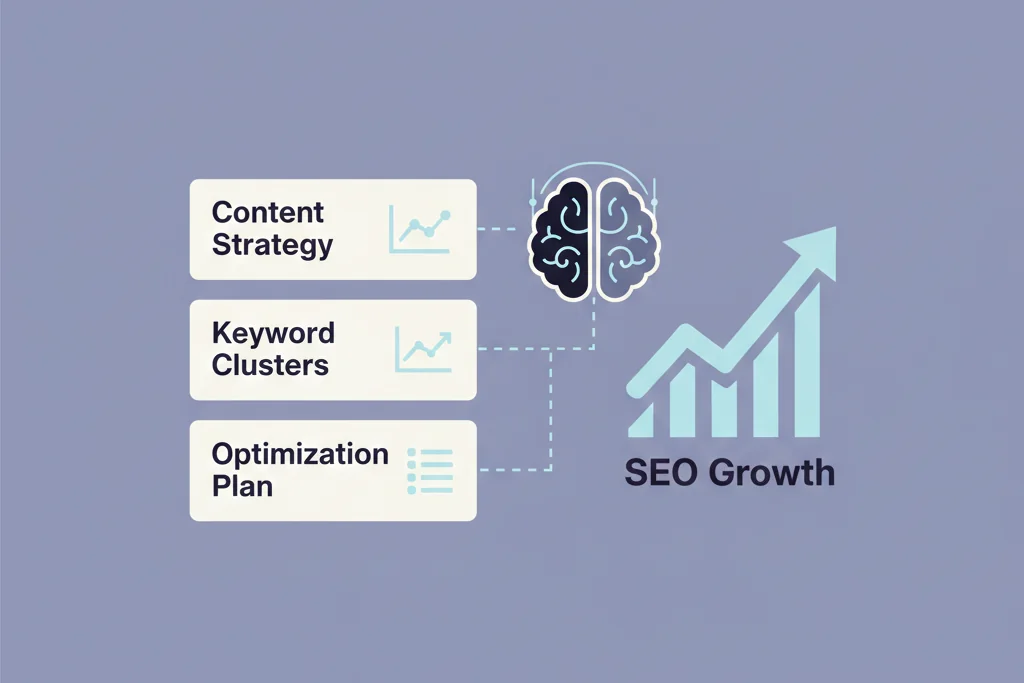
Okay, let’s flip the script. How do we use the tools to do the work?
Beyond “Write Me a Blog Post”
Most people use ChatGPT like a junior copywriter. That is a waste. Use it like a senior strategist.
Using “Deep Research” for Competitor Analysis
Don’t just look at a competitor’s blog. Ask OpenAI to reverse-engineer it.
Try a prompt like this:
“Analyze [Competitor URL]. Identify their main content clusters and tell me where they are weak on user intent. What questions are they failing to answer deeply?”
This finds Content Gaps that actually matter. Not just missing keywords, but missing value.
Intent Analysis at Scale
Keywords are useless if you don’t know why someone is searching for them.
You can upload a CSV of thousands of keywords to ChatGPT (using Advanced Data Analysis) and ask it to classify them:
- Transactional (Buying mode)
- Informational (Learning mode)
- Navigational (Looking for a specific site)
I’ve done this for clients and saved roughly 20 hours of manual tagging. It’s not perfect, it gets confused sometimes, but it gets you 90% of the way there.
Technical Audits with Code Interpreter
You don’t always need a $900/month enterprise tool to check your technical health.
Log File Analysis
You can upload anonimized server logs. Ask the AI to identify crawl patterns.
- “Which URLs are returning 404s most often?”
- “Is Googlebot spending too much time on low-value tag pages?”
Schema Generation
Writing JSON-LD code is annoying. One missing comma breaks the whole thing.
I let the AI write my schema. I just paste the content of the page and say: “Generate valid Article and FAQ schema for this text. Wrap it in script tags.”
Warning: Always validate it in Google’s Rich Results Test. The AI hallucinates syntax sometimes. Trust, but verify.
Regex for GSC
If you use Google Search Console, you know Regular Expressions (Regex) are powerful but confusing.
Just tell the AI: “Write me a Regex filter for GSC that matches all queries containing ‘price’ or ‘cost’ but excludes brand terms like ‘Nike’.”
It works like a charm.
The “Human-in-the-Loop” Content Workflow
Please, for the love of the internet, don’t publish raw AI content. It sounds generic. It has no soul.
Use the Sandwich Method:
- Human Strategy: You define the angle, the hook, and the unique insights.
- AI Draft: The AI does the heavy lifting of writing the structure and basic paragraphs.
- Human Edit: You add voice, specific examples, and fact-check.
Fact-Checking Hallucinations:
I once asked ChatGPT for stats on e-commerce conversion rates. It made up a study from 2023 that didn’t exist. Always click the citations or double-check the numbers.
Part 3: Risks and Future-Proofing
The Traffic Drop Dilemma
Here is the part that hurts.
You are going to lose traffic for simple queries.
If someone searches “What is a meta tag?”, the AI will answer it perfectly. They won’t click your “Ultimate Guide to Meta Tags.”
Navigational queries are dead.
So, what do you do? You pivot to Complex Search.
Focus on questions that require nuance, opinion, and experience. Things AI struggles with.
- Instead of “What is X?”, write “Why X failed for us and what we did instead.”
- Instead of definitions, offer playbooks and strategy.
Brand Reputation Management in AI
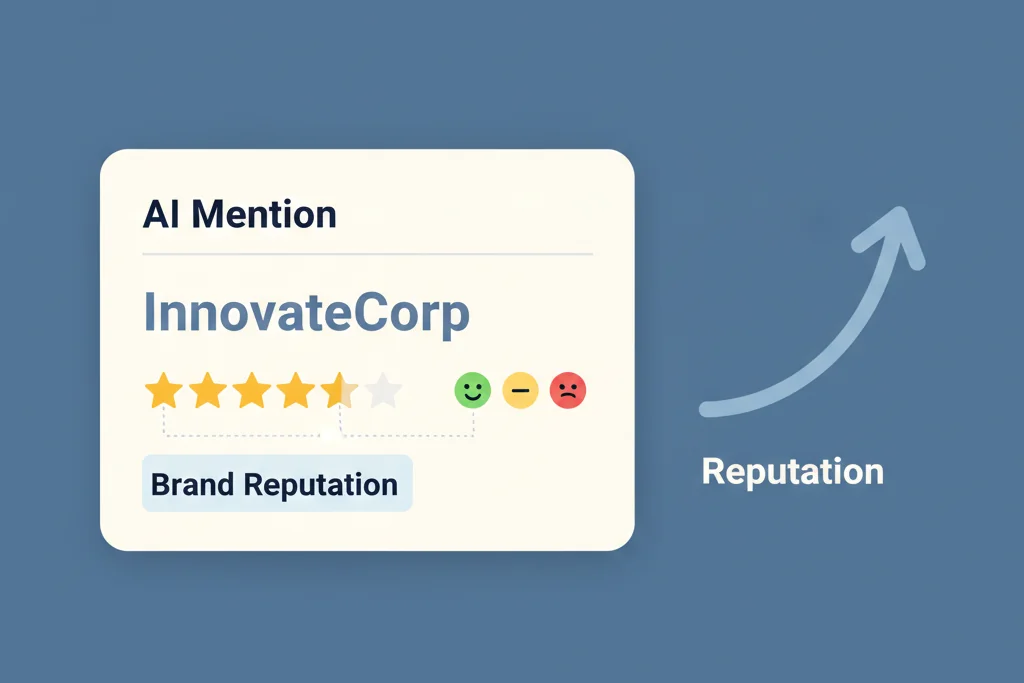
The “Black Box” problem is real. What if ChatGPT gives wrong info about your company?
I’ve seen it happen. A client’s pricing was listed as “$50” when it was actually “$500”.
You can’t just log in and edit the result.
Correcting the Record:
You have to flood the web with accurate, structured data. Update your “About” page. Ensure your crunchbase, LinkedIn, and Wikipedia (if you have one) are consistent.
You are basically “retraining” the live results by making the truth undeniable across the web.
Conclusion: The Hybrid SEO Strategy
You cannot ignore OpenAI. It is both your biggest competitor and your best employee.
The future of SEO isn’t just about keywords. It’s about Entity Optimization.
You want to build a brand so strong and distinct that users ask the AI specifically for you.
“Hey ChatGPT, summarize the new article from [Your Brand].”
That is the ultimate win condition.
So, here is what you should do next.
Go check your server logs or your analytics. See if OAI-SearchBot is hitting your site. If it’s not, you might be invisible to the biggest shift in search since 2000. Fix that first.