
Most agency owners start as experts in one specific thing. Maybe you’re the wizard of technical SEO, or perhaps you can write Facebook ad copy that practically forces people to click. But eventually, you hit a wall.
It’s the growth ceiling. You want to offer Google Ads, but you don’t have the time to learn the interface. You want to sell high-end web design, but you can barely find the time to invoice your current clients. You’re stuck. You can’t be everywhere at once, and hiring a full-time expert for every new service is a massive financial gamble.
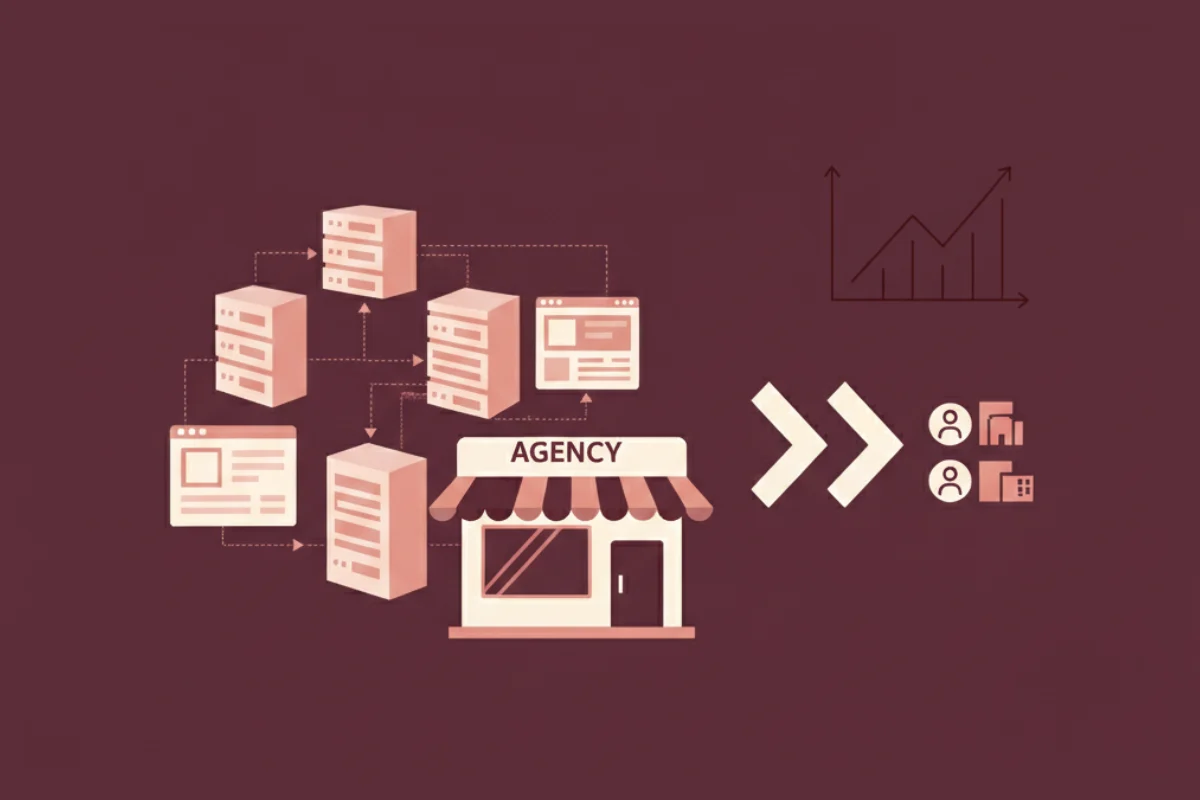
This is where white label marketing comes in. Think of it as the “ghostwriting” of the digital service world. It allows you to sell 5-star services under your own brand while a specialized backend team handles the actual work.
How White Label Marketing Works (The 3-Way Relationship)
Honestly, this part trips people up all the time. They think it’s just basic outsourcing, but it’s actually more like a choreographed dance between three parties.
- The Provider: This is the specialized backend team. They’re the ones in the trenches doing the keyword research, building the backlinks, or managing the PPC bids. They stay invisible.
- The Agency (You): You are the frontend. You own the client relationship. You’re the one on the Zoom calls, the one signing the contracts, and the one whose logo is on every report.
- The Client: The end-user. They get great results and have no idea that a third party was involved. They just think you’ve got a massive, incredibly talented team in the back room.
The workflow is usually pretty seamless. You close the deal, send the project details to your partner, and they execute. At the end of the month, they send you a report. You slap your logo on it, send it to the client, and take the credit.
White Label vs. Outsourcing vs. Reselling. What’s the Difference?
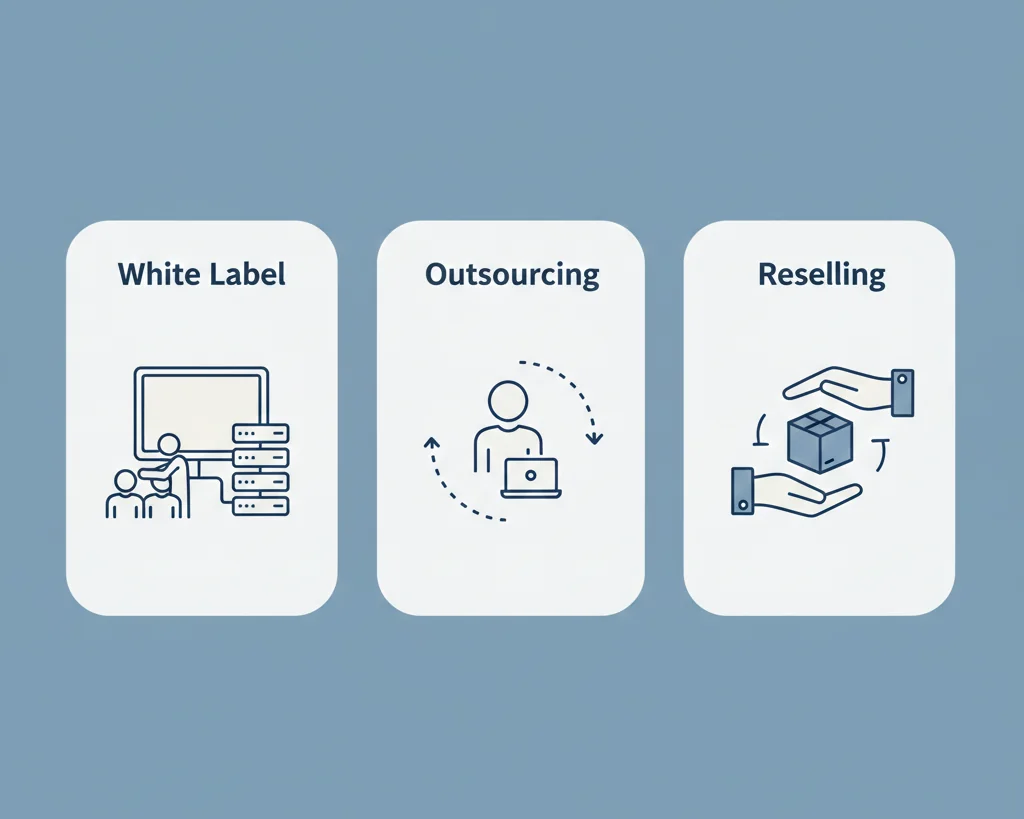
I might be wrong, but I feel like people use these terms interchangeably far too often. There are small but vital differences you need to know.
White Labeling is fully integrated. The work is done under your brand, your emails, and your reporting dashboards. To the client, the provider doesn’t exist.
Traditional Outsourcing is a bit more “wild west.” Often, the freelancer or agency you hire might even communicate with the client directly. The focus is usually on just getting a task done rather than maintaining your brand’s “vibe.”
Reselling is when you sell someone else’s product or service and keep the original branding. If you’re a HubSpot partner, your clients know they’re using HubSpot. You’re just the middleman helping them run it.
Most Popular White Label Marketing Services in 2026
The market for these services is exploding. According to recent data from Amra and Elma, the white label market is projected to hit nearly $99.19 billion by 2026. If you aren’t tapping into this, you’re leaving money on the table.
Here’s what agencies are actually buying right now:
- SEO & Content: This is the big one. On-page audits, technical fixes, and high-authority link building. Most agencies don’t have the time to build a 20-person outreach team, so they white label it.
- Paid Media (PPC): Google and Meta ads change their algorithms every Tuesday. Partnering with a dedicated PPC white labeler ensures your clients’ budgets aren’t being wasted by someone who hasn’t checked the dashboard in a week.
- Social Media Management: Creating content calendars and engaging with communities is a massive time sink.
- Web Development: Scaling from simple WordPress sites to complex Shopify builds is a lot easier when you have a bench of developers ready to go.
- Email & SMS Marketing: Automated funnels are high-value, but they’re technical. White labelers can build the “plumbing” while you focus on the strategy.
The Business Case. Why Agencies Are Flipping the Script
Why would you do this? My previous experience running a small boutique shop taught me that the “hiring frenzy” is a trap.
1. Scalability on Demand
Imagine you land three big clients on a Friday afternoon. Usually, that’s a nightmare. With white label, you just ping your partner. You can take on 10 new clients tomorrow without posting a single job ad today.
2. Reduced Overhead
A senior SEO strategist can cost $100,000 a year plus benefits. Then you have to buy them seats for Ahrefs, SEMrush, and Screaming Frog. Digital Timesavers reports that marketing tools alone can cost a small agency $500 to $2,000 a month. White labelers absorb all those costs.
3. Focus on High-ROI Tasks
You shouldn’t be fixing CSS bugs at 2 a.m. You should be closing deals. White labeling moves you from “working in the business” to “working on the business.”
4. Expertise Access
If you’re a solo founder, you’re likely a generalist. White labeling gives you instant access to people who have spent a decade mastering one specific niche.
The “Hidden” Risks. What No One Tells You
It isn’t all sunshine and passive income. Here’s where I’d probably mess this up if I rushed.
The Quality Gap is real. If your partner has a bad week, it’s your reputation on the line. Since the client doesn’t know the provider exists, they’ll blame you for every typo or missed deadline.
Then there’s the Communication Lag. You’re the middleman. If a client has an emergency on a Google Ads campaign, you have to wait for your partner to respond before you can give an answer. It can feel like playing a high-stakes game of “Telephone.”
Lastly, Data Security is a massive concern. You’re handing over sensitive client info to a third party. If they don’t have strict NDAs and security protocols, you’re legally responsible.
How to Choose a White Label Partner (The 7-Point Vetting Checklist)
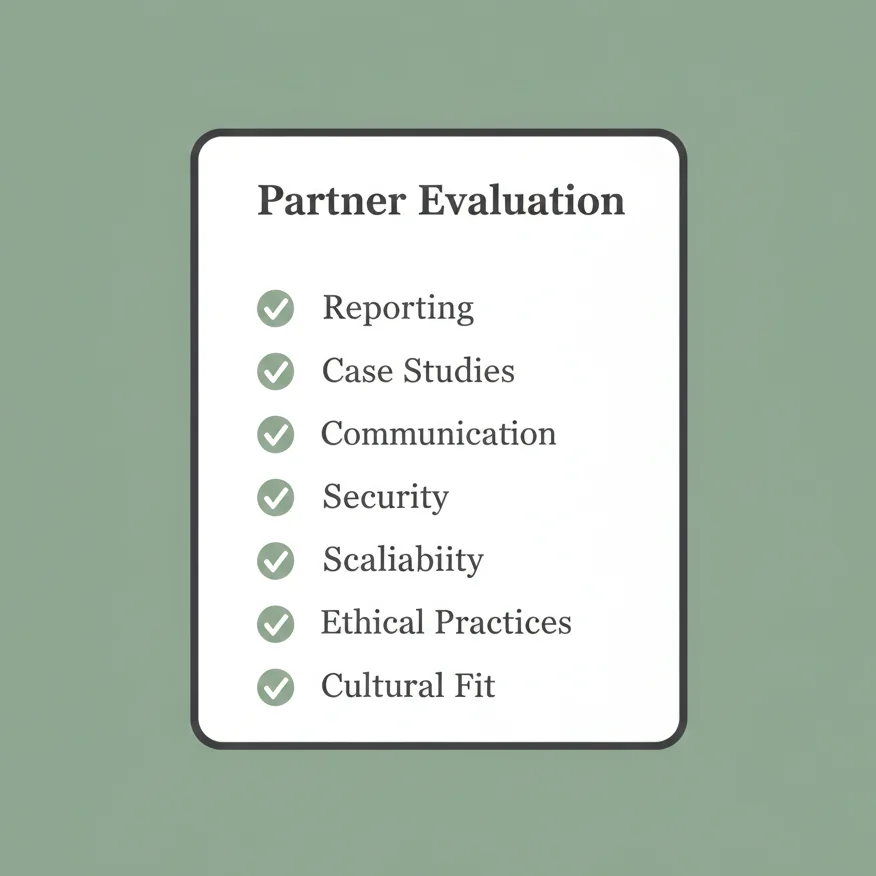
Don’t just pick the cheapest option on a freelance site. Use this checklist instead:
- Native Reporting: Do they offer custom-branded dashboards? If you have to manually copy-paste data into a slide deck every month, you aren’t saving time.
- Case Study Proof: Don’t just take their word for it. Ask for blinded case studies in your specific niche.
- Communication Speed: Test them during the sales process. If it takes them three days to answer a question when they’re trying to win your business, it’ll take a week once they have it.
- Security Protocols: Ask about their NDAs. Ensure your client’s data stays in a vault.
- Scalability: Can they handle one client today and 50 by next year? You don’t want to outgrow your partner in six months.
- Ethical Practices: Especially for SEO. Are they using “white hat” methods? One bad link-building campaign can get your client’s site nuked by Google.
- The “Vibe” Check: Do they act like a vendor or a partner? You want someone who cares about your client’s success as much as you do.
Pricing for Profit. How to Mark Up White Label Services
This is the part most people get wrong. They just add a flat 20% and call it a day. That’s a fast track to going broke.
- The Wholesale Model: You pay the provider a flat fee (say $500/month) and charge the client your retail rate ($1,500/month). Your margin is the difference.
- The Revenue Share Model: You split the retainer, usually 60/40 or 50/50. This works well for high-ticket consulting.
Strategy Tip: Don’t just charge for the execution. Charge for the management and strategy layer. You’re the one providing the vision, the oversight, and the relationship. That has value.
According to reports, agencies that outsource 40% to 60% of their work grow 2.3 times faster with 20% higher margins. That’s because they aren’t bogged down by the “doing.”
Frequently Asked Questions (FAQs)
Is white label marketing ethical?
Absolutely. It’s no different than a car manufacturer using parts from different suppliers. You are the architect of the strategy, the partner is the construction crew.
Should I tell my clients I’m using a white label partner?
Most don’t. Clients care about results and communication. As long as you’re managing the project and ensuring quality, the “how” matters less than the “what.”
What is the best way to transition from in-house to white label?
Start slow. Pick one service that is a bottleneck (like link building) and move that to a partner first. Once that’s stable, move the next piece.
How do I handle client meetings if I’m not the one doing the work?
You need to stay high-level. Focus on the goals and the results. If a client asks a hyper-technical question, it’s okay to say, “Let me check with the technical team on that and get back to you by EOD.”
Conclusion. Is White Label Right for Your Agency?
White label marketing isn’t just a trend, it’s a survival strategy for 2026. If you’re a startup, it lets you look like a giant. If you’re an established firm, it lets you stay lean and profitable.
Honestly, the biggest risk is doing nothing and letting your competitors offer a full suite of services while you’re still stuck in one niche.